
Here's how many new homes were built in the Lancaster City Council area as authority fails housing test
Housebuilding statistics for the last three years are in...
Lancaster City Council has failed to deliver the number of new homes the area needs, according to new figures.
Just 48 percent of the properties required in the authority’s patch were actually built over a three-year period. The council was one of two in Lancashire that fell short - the other being Chorley.
Across the county, a total of 18,291 dwellings sprung up between 2022/23 and 2024/25 - with 11 out 14 local authority areas exceeding their minimum new housing needs, as calculated by a government formula. The figures include all types of development in the private and social sectors.
In Lancaster, only 612 dwellings were completed in the timeframe out of the city's 1,271 target.
That means the city council failed the government's annual housing delivery test by such a significant margin that it will now have three demands placed upon it - including drawing up an action plan to help fulfil its new home needs.
The authority must also add a 20 percent ‘buffer’ to its identified supply of deliverable housing sites - thereby setting aside more land than it would otherwise have done - and approve the development of plots outside defined settlements intended for housebuilding, unless the benefits of doing so would be “substantially outweighed by any adverse effects”.
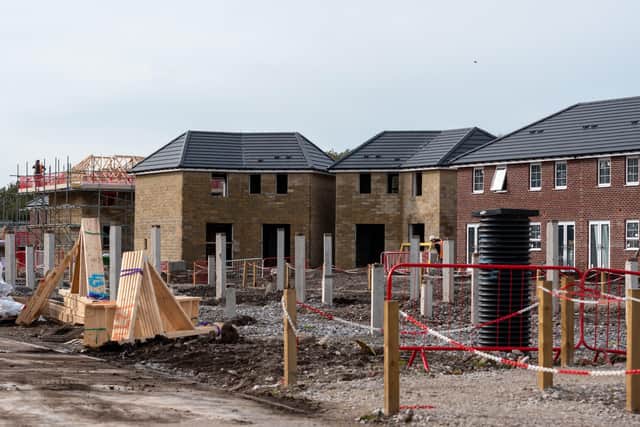

Lancaster City Council’s cabinet member for planning, Sue Tyldsley, noted that this year was the first time the authority had fallen below a perfect 100 percent score in the housing delivery test since it was introduced in 2019.
She added: “However, the data is not a surprise given the challenges that the district faces in terms of suitable land availability and infrastructure capacity.
“The application of nationally-set housing targets that fail to reflect local circumstances means that there is a greater risk of housing being delivered in the wrong locations and without the necessary infrastructure to support it.
“However, the council is already responding positively to the need to build more houses. It has commenced work on a new local plan which is expected to identify housing land allocations. In addition, at each of the previous four planning regulatory committee meetings, the committee has approved applications for new house building across the district.
“The council will continue to work with developers, landowners and our local communities to aim to secure the best and most appropriate housing outcomes for our district”.
Apart from Lancaster and Chorley, Lancashire's 12 other councils with planning responsibilities all achieved at least the 95 percent housing delivery test score that shields them from any government intervention in their planning processes. Burnley, Preston, Ribble Valley and Hyndburn all saw more than five times as many homes built as were demanded by that calculation - with Preston delivering the most by volume at 3,695 units.
LANCASHIRE HOUSING DELIVERY TEST RESULTS (2022-23 to 2024-2025)
The figures below show the number of homes built out of the minimum calculated need - and the resultant housing delivery test score as a percentage:
Blackburn with Darwen - 1,623 / 426: 381 percent
Blackpool - 658 / 423: 156 percent
Burnley - 783 / 164: 478 percent
Chorley - 986 / 1,553: 63 percent
Fylde - 1,424 / 815: 175 percent
Hyndburn - 632 / 154: 411 percent
Lancaster - 612 / 1,271: 48 percent
Pendle - 534 / 397: 135 percent
Preston - 3,695 / 803: 460 percent
Ribble Valley - 1,552 / 365: 425 percent
Rossendale - 530 / 550: 96 percent
South Ribble - 1,754 / 525: 354 percent
West Lancashire - 1,474 / 529: 274 percent
Wyre - 2,034 / 859: 237 percent
Source: Ministry of Housing, Communities and Local Government