
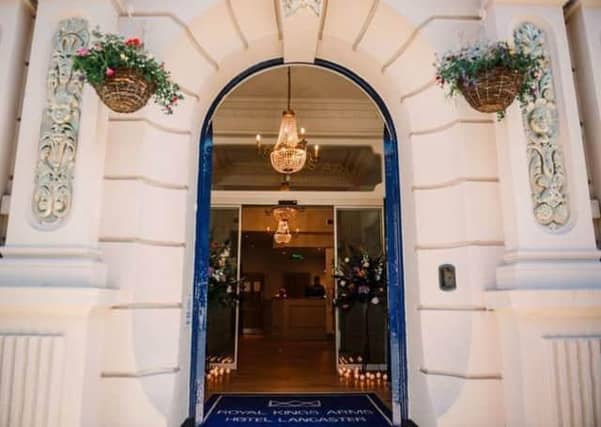

And some of the best examples of this historic past can be seen in the magnificent buildings found around Lancaster and Morecambe.
These structures have all been singled out because they hold listed building status.
In fact, the Lancaster district has over 1,300 listed buildings and structures, designated for their architectural or historic interest. A listed building is of national significance and is protected by the 1990 Planning (Listed Buildings and Conservation Areas) Act.
The 19 buildings we have chosen all have an interesting story to tell. Take a look.
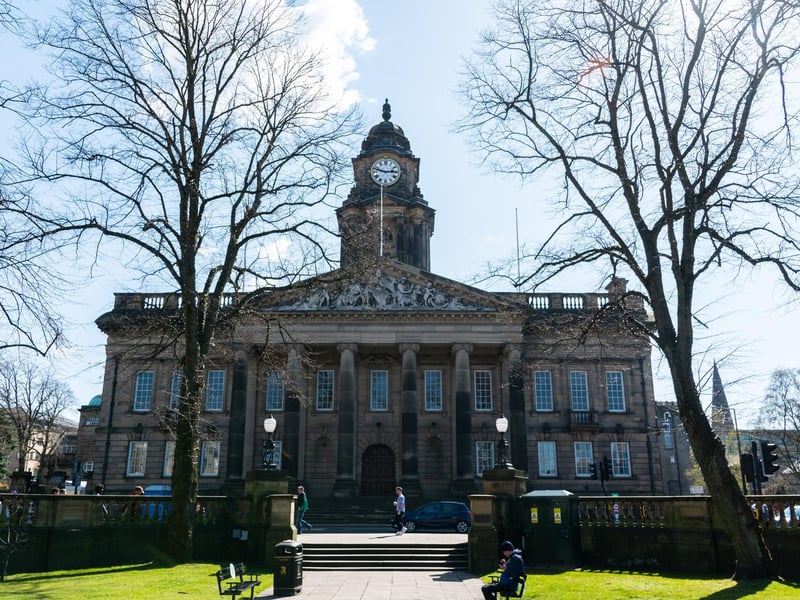
5. Lancaster Town Hall
Lancaster Town Hall was officially opened on December 27 1909 by Lord Ashton. It replaced the existing town hall, now the city museum in Market Square, as the then Lancaster Corporation had outgrown the building. The corporation was unable to finance a new building but Lord Ashton offered to pay for a new municipal building. The construction began in 1906 with Waring & Gillow the main contractors for the stone work, furniture and wood carvings. The stone carving over the front steps was undertaken by F W Pomfrey and the stained glass windows were made by local firm Shrigley and Hunt. The final cost of the complete works, which also included a redevelopment of Dalton Square and the erection of a statue of Queen Victoria, was £155,000. Photo: Kelvin Stuttard
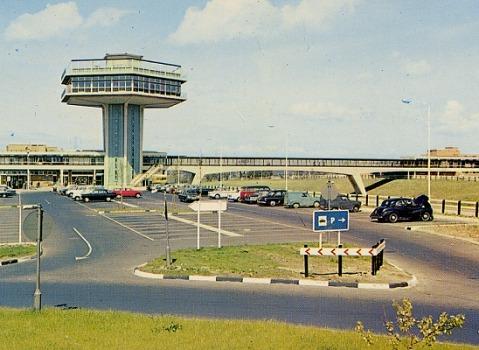
6. Lancaster (Forton) Services Tower
Opened in November 1965 with the name Forton Services, it was the second service station to open on the motorway - Charnock Richard being the first - and is named after the nearby village of Forton. The architect was T P Bennett and Son and it was originally operated by The Rank Organisation (Top Rank Motor Inns). When it first opened, there was no clue that its design was going to go on to become so iconic. In fact, the Ministry weren't actually that keen on it. Photo: PDA
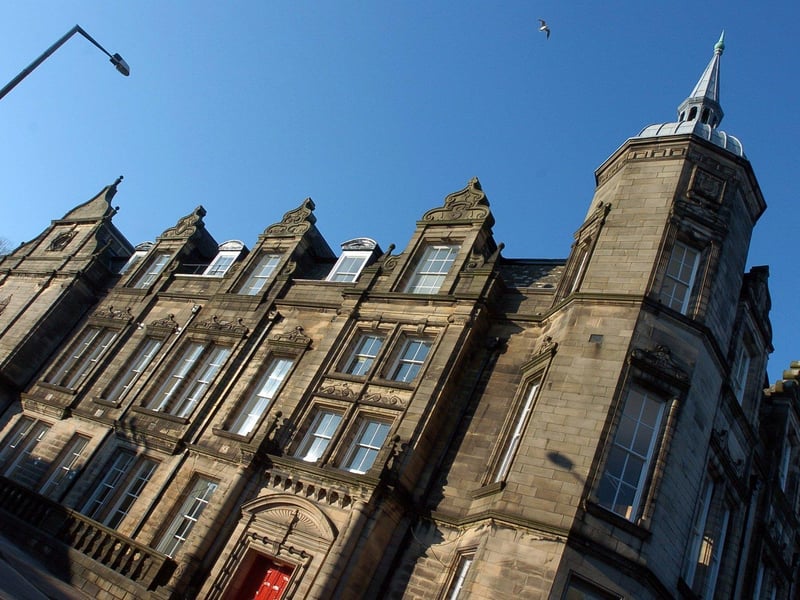
7. The Storey, Lancaster
This prestigious Grade II listed building was constructed in 1887 to commemorate Queen Victoria’s Golden Jubilee, and later extended in 1906. Thomas Storey provided the funding for the building which was renamed the Storey Institute in his honour in 1891. Its purpose was for ‘the promotion of art, science, literature, and technical instruction’. Its first art exhibition, held in 1889, included paintings by Gainsborough, Constable and Canaletto. The Storey is one of the most recognisable buildings in the city and is a gateway to the town centre. It also acts as the gateway to Castle Hill and the medieval Lancaster Castle. Photo: Steve Pendrill
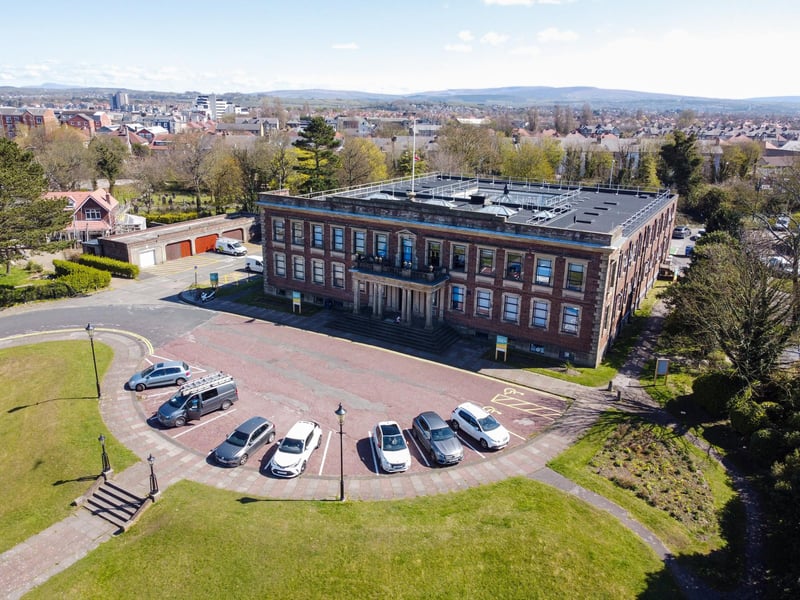
8. Morecambe Town Hall
The building was commissioned to replace the old 19th Century town hall, which had been built for the Poulton, Bare and Torrisholme Local Board of Health on Morecambe Street. The new building was designed by Alfred Cross and his son, Kenneth Cross, in the Neoclassical style and built by local builders Edmondson Brothers at a cost of £40,000. Morecambe Town hall was opened on June 7 1932 - 10 months to the day after the laying of the foundation stone - by Sir Maurice Jenks, the Lord Mayor of London. A very modern Lord Mayor, he made the journey by air from Croydon Aerodrome and his words in the Council Chamber were broadcast. Photo: Kelvin Stuttard