
Name of new council for Lancaster and Morecambe approved by government
Some familiar and historic local authority identities will disappear.
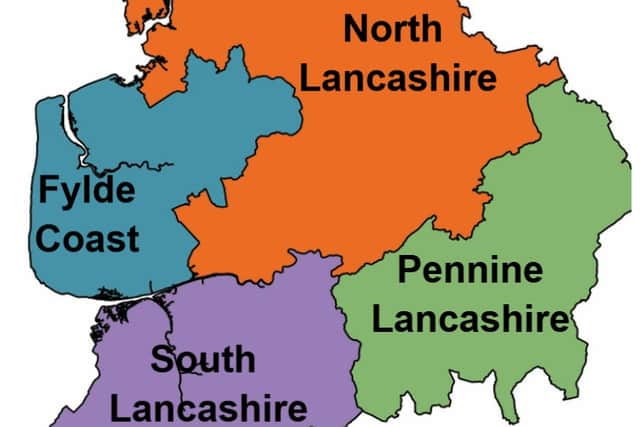
The names of the four new councils that will cover Lancashire from 2028 have been approved by the government - with the one for the Lancaster district to be known as ‘North Lancashire Council’.
Ministers announced last week how the county would be carved up when its 15 existing local authorities are abolished.
Those current councils had put forward five different suggestions for the size and shape of their replacements under the government-ordered revamp – along with what were largely generic geographical monikers to identify what will be merged municipal areas.
When the Ministry of Housing Communities and Local Government revealed its chosen option for the new-look Lancashire last Thursday, it referred to the new councils by the slightly more nuanced names that had subsequently been suggested for them by the existing authorities in those areas.
At that point, the titles remained provisional, but a letter sent to Lancashire’s local authority leaders and chief executives this week – seen by the Lancaster Guardian – reveals they have now been formally signed off by Whitehall.
The matter is set to be discussed at a strategic board meeting in Lancashire next week when alternatives could be put forward, but the government has said it would only consider any “unanimous” proposals for changes - and only until 17th August.
Otherwise, from 1st April 2028, Lancashire will be served by local authorities called:
***NORTH LANCASHIRE COUNCIL – covering the current Lancaster, Preston and Ribble Valley council areas (373,664 residents);
***SOUTH LANCASHIRE COUNCIL – covering the current Chorley, South Ribble and West Lancashire council areas (358,947 residents);
***FYLDE COAST COUNCIL – covering the current Blackpool, Fylde and Wyre council areas (348,381 residents);
***PENNINE LANCASHIRE COUNCIL – covering the current Blackburn with Darwen, Burnley, Hyndburn, Rossendale and Pendle council areas (520,563 residents).

The names will not officially be instituted until the legislative process to establish the new authorities has been completed in Parliament next year.
Once they are operational, the replacement councils will have the same power as all local authorities to change their names via a vote of their memberships, should they wish to do so.
Possible names were put forward for all of the councils that could have been created under the five proposed reconfigurations that Lancashire submitted to ministers last November – initially just by those authorities that backed each option. Later, the existing councils offered their opinions on how any new authority that might be adopted in their area should be identified.
The new councils will be responsible for delivering all local services in their enlarged areas, ending the current two-tier split between Lancashire County Council and the 12 district authorities in the county. The four will each be all-service ‘unitary’ councils, as the existing Blackpool and Blackburn with Darwen councils have been since 1998.
The county council, the dozen districts and the two current unitaries will all cease to exist on 31st March, 2028.
Protecting Lancashire’s cities in shake-up
The government letter – which deals with various arrangements for the formation of the new councils – specifically references the implications of the changes for the city status held by Lancaster and Preston.
It notes that the title has been “conferred by the Monarch and applies to a defined locality”, adding that “arrangements need to be put in place to ensure that this status is preserved” once the local authorities covering those cities are no longer coterminous with them.
The correspondence states that the establishment of “Charter Trustees” is the usual solution in such a scenario – and that they are empowered to “hold historic property, such as charters or insignia” for a city.
Lancaster’s city status was bestowed on it back in 1937, whilst it was granted to Preston as part of Queen Elizabeth II’s silver jubilee celebrations in 2002.