
Heysham flat residents raise concerns over ‘inadequate’ fire safety measures after smoke detectors are removed
Residents in a Heysham apartment block say their lives are being put at risk after the firm which manages the flats removed the communal fire alarms.
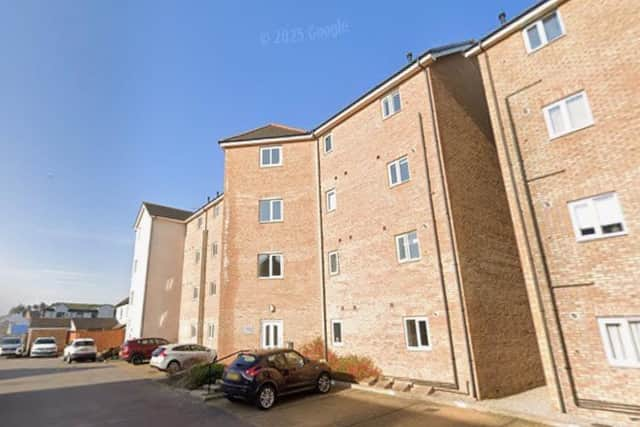
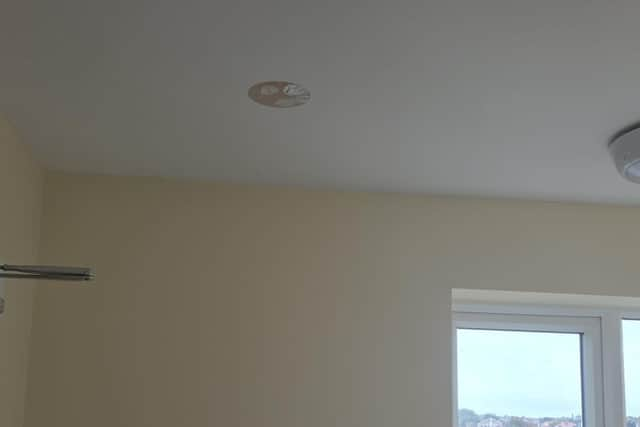
A couple living in Osprey House in Mears Beck Close said the smoke detectors in the communal areas of the four-storey building were removed in early September, and have not been replaced.
Property management company FirstPort say they follow government and fire service guidance which says residents should operate a ‘stay put’ policy in the event of a fire.
However, Dean Harrison, a trained Merchant Navy firefighter with 44 years’ experience, said the policy has put residents in the eight apartments – including vulnerable elderly residents and children – at risk.

Mr Harrison, who has lived in the flat with his partner Alison for 11 years, said there are also no fluorescent signs in the communal hallways, and that the signage in place is too high and would not be visible if the corridor became smoke-filled.
Mr Harrison said he was particularly concerned after a resident died in a fire at a FirstPort tower block in Poplar, east London, in September.
Residents told the BBC after the blaze that no alarms activated during the fire and they had to find their way out of the block in darkness, as no emergency lighting triggered.
Mr Harrison said a ‘stay put’ policy fails if there is insufficient compartmentation within the apartment block.
“Building management has advised a ‘stay put’ policy while simultaneously failing to maintain the mandatory physical infrastructure required to support it,” he said.
"A ‘stay put’ strategy assumes a fire will be completely contained within the flat of origin for 30 to 60 minutes.
“Without total compartmentation, this policy presents an immediate life safety risk to residents."
Mr Harrison also questioned a shortage of regulation fire doors in the property, which could allow smoke to travel more quickly through the building and deprive residents of an early warning system.
“The building relies entirely on a single central stairway for access and egress,” he added. “This is legally permissible for a four-storey building only if the stairway is an entirely enclosed, smoke-free sanctuary protected by fully compliant fire doors.
"I bought my own smoke detection unit for the hallway as I'm genuinely worried.”
He also pointed to the Building Safety Act and the Regulatory Reform (Fire Safety) Order 2005, which says property managers, landlords or the ‘responsible person’ have a strict legal duty to maintain working fire detection systems, and cannot strip out working smoke alarms and leave residents unprotected.
A spokesperson for FirstPort said the smoke detectors were not required in the communal areas and would not be replaced.
They pointed to the National Fire Chiefs Council’s ‘stay put’ guidance, as well as the Government ‘Fire Safety in Purpose Built Blocks of Flats’ guidance, which says that in ‘general needs’ blocks designed to support a ‘stay put’ policy, it is unnecessary and undesirable for a fire alarm system to be provided.
The spokesperson said: “Resident safety is our top priority, and all fire safety decisions are based on professional advice and independent assessment.
“Following a recent fire risk assessment, it was confirmed that the smoke detectors in the communal hallways were not consistent with the building’s approved fire safety strategy.
“Their removal does not reduce the fire safety measures in place. Residents continue to be protected by smoke detectors within their individual homes, and the building’s fire safety arrangements remain under regular review.
“Residents were informed of the change and provided with guidance on the building’s fire safety strategy and what to do in the event of a fire. We are happy to discuss any questions or concerns directly with residents.”