
Councillors call for urgent action after floods cause severe damage across Lancaster
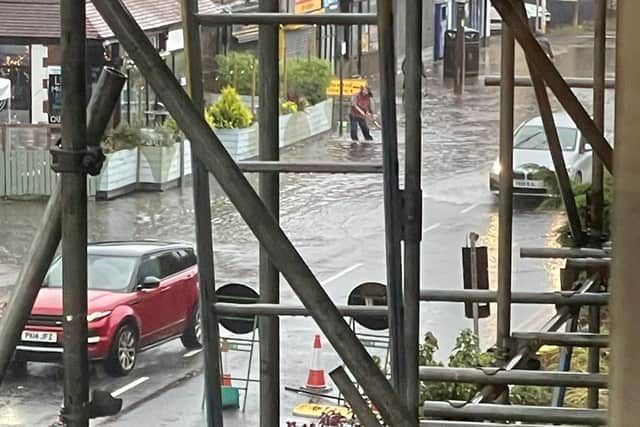
Last month’s flash floods in Lancaster left dozens of homes flooded, businesses closed and roads disrupted.
And Green councillors are now pressing for urgent action to reduce the risk of similar events happening again.
They are calling on Lancashire County Council and United Utilities to answer residents’ questions about the district’s drains and sewers, which were unable to cope with the intense rainfall of August 20.
They are also demanding an immediate review of how gullies, drains and sewers are maintained, as well as longer-term improvements.
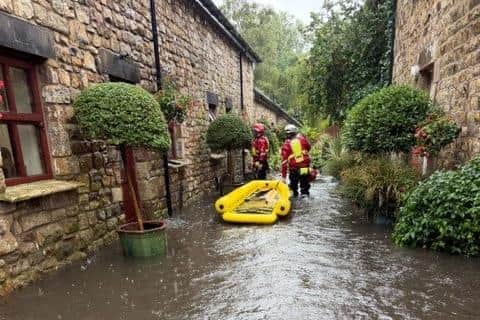

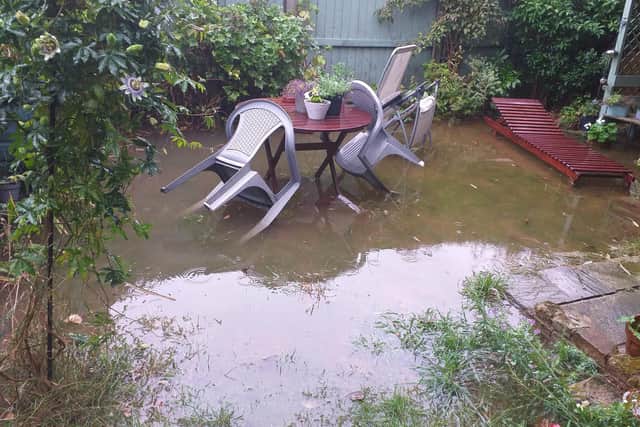
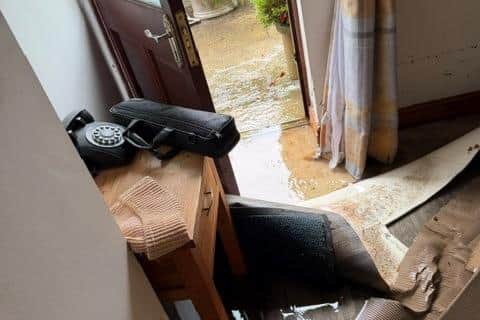
Marsh ward councillor Mandy Bannon said: “Having your home flooded is devastating. People are understandably upset about the loss of furniture, damage to their homes and the clearing-up that follows.
"The immediate response by the Fire and Rescue Service was excellent, and thanks also go to city council staff who helped residents and businesses afterwards.
"But residents whose homes were flooded are really anxious about the future. They want to know what can be done to stop this happening again. Many are concerned that blocked gullies and drains may be to blame.
“In Willow Lane and other flooded roads such as Princess Avenue, off Ashton Road and Avondale Road in Bowerham, the problem appeared to be made worse by surface water running straight down from higher ground.”
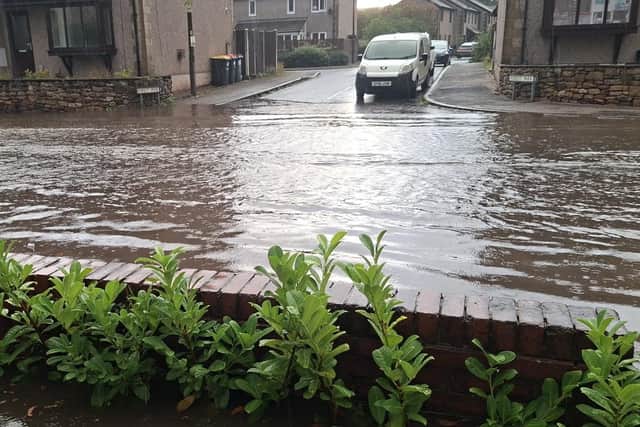
“I have asked United Utilities about their ongoing investigations into the sewer under Willow Lane. We understand they have not been able to complete the investigation yet – but we will keep pushing for answers.”
County Coun Paul Stubbins said: “The way our gullies, drains and sewers are linked is complex and restricted by the Victorian sewerage network we still have.
"Surface water drains flow into the sewers, so during a sudden flash flood the water can back up because the network simply does not have the capacity to discharge quickly enough.
“The Lancaster City Surface Water Management Plan was commissioned by the county council after the December 2015 Storm Desmond floods.
"It was finally published in August 2023, and it confirms that intense rainfall routinely overwhelms the combined sewer system and highway drains.
"Surface water from higher ground, in areas such as Bowerham and Marsh, runs into lower-lying streets. Because the county council manages gullies and drains while United Utilities manages the sewers, the two organisations must work together if we are to get a full picture and effective solutions.
“There is also the constant problem of blocked gullies. After county council moved to a planned gully maintenance programme, it soon became clear there was less flexibility to respond to residents’ requests to unblock specific drains.
"As a result, I have persuaded the county officers to be more responsive to requests for cleaning, particularly where footways or properties are affected by pooled water. I am now calling for a full review of the main
surface water flow paths from higher to lower ground.
"Blocked gullies are only part of the problem, but we need assurance that the two-yearly cycle of gulley cleaning properly considers how these connected drains contribute to flooding.
"At present I am not confident that reported blockages are always acted on swiftly enough or with this bigger picture in mind.”
Paul added that one of the worst-affected locations was Carr House Farm, where two sewerage pipes meet at a bottleneck, resulting in deep sewage flooding of around 15 properties.
"United Utilities has so far neither helped with the clear-up nor committed to increasing local network capacity. While the company is investing £48m in major new storm water storage tanks at the Lancaster Wastewater Treatment Works (due for completion in spring 2029), this will not solve immediate capacity and maintenance problems in the streets that flooded last month.”
Robin Loxam, whose property at Carr House Farm was badly affected, said: “We had to bear the brunt of the damage inside our homes after thousands of gallons of sewage flooded the properties. Then, incredibly, we were charged for the water we used to clean up the mess.”
County Coun Gina Dowding said the longer-term answer lies in changing how our urban areas deal with heavy rain, where roads and concreted surfaces don’t allow water to soak away naturally.
Councils have been developing planning policies in response to the climate emergency and already require new housing developments to include Sustainable Drainage Systems.
Policies are being reviewed to strengthen flood resilience by designating ‘High-Risk Urban Catchments’ where developers must provide temporary excess water storage on-site.
These “micro-basins”, swales and underground crates help surface water to be held back and released slowly rather than discharged straight into the sewers.
Coun Dowding said: “We must push to adapt the existing urban landscape. Experts are highlighting the need for water to soak away before entering the drain system. This can be done using retrofit permeable paving, rain gardens, green roofs, rainwater harvesting and new “pocket parks”.
“We need water companies to invest in these measures to capture and slow rainwater so the network is not overwhelmed in our towns and cities.
“Other places are already acting. In the Netherlands local authorities have run campaigns encouraging residents to remove unnecessary concrete and create more permeable surfaces. We should explore similar initiatives here.”
A United Utilities spokesperson said: “Our teams attended the incident at Carr House Lane last Thursday after reports of flooding.
“We carried out an investigation of the sewer network and found it was flowing as normal. We determined that the flooding was not caused by the sewer network, but by surface water runoff from the highway.”
What can local residents do?
Affected residents can help by reporting the flooding. The county council needs accurate information to investigate the scale of the flooding and identify whether grant funding may be available for longer-term measures.
Reports should be made through the Love Clean Streets app, the council’s online contact form at www.lancashire.gov.uk, or by ringing 0300 123 6780 during working hours.
Flood Information Sheets have been sent to addresses believed to have been affected. Completing and returning these (or logging the same details online) will ensure the information is properly recorded.
For advice on how to manage risks of flooding again, see the north west’s dedicated flooding website at https://thefloodhub.co.uk
Residents can also access useful information on the Flood Resilience Forum website at https://www.lancashireprepared.org.uk/protect-yourself/flooding
The Lancaster City Surface Water Management Plan was commissioned by Lancashire County Council (produced by Jacobs consultants) and can be found at https://www.lancashire.gov.uk/council/performance-inspections-and-reviews/environment-roads-and-transport/
Residents are reminded that flooding caused by sea, rivers or canals is the responsibility of the Environment Agency, who can be contacted via https://floodaction.campaign.gov.uk/