
'Some Brits don't even turn up for interview': care boss defends need for overseas workers as visas axed
Overseas workers have been crucial in filling vacancies at a Lancashire care company, its boss has said.
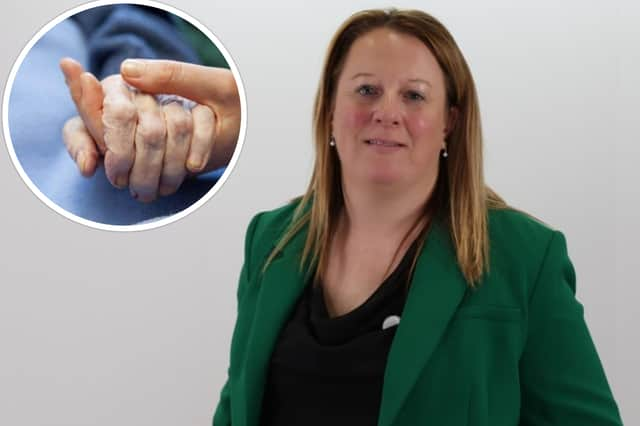
Caroline Cosh, managing director of Clifton Homecare Limited in St. Annes, says the 10 staff she currently employs who came to the UK from abroad have also brought “immeasurable” benefits to the firm - and the people who rely on its services.
She was defending overseas recruitment after the government announced last week that it will stop issuing social care visas – ending a route into the country for those willing to work in that field.
It forms part of a wider effort to reduce immigration, which Sir Keir Starmer said had been fuelled by some businesses being encouraged to “bring in lower-paid workers rather than invest in our young people”.
However, the scrapping of care worker visas prompted a chorus of criticism from within the sector, which claimed foreign workers had helped keep the care system afloat in recent years. The government says visa extensions will be permitted for those care workers already here, during what it describes as a “transition period” through until 2028.
Caroline started to recruit from overseas at the height of the pandemic, with the first workers of a total of 15 she has since employed arriving in January 2021 – the majority from the Philippines and Nigeria.

She said that while she always offers opportunities for UK nationals to apply for vacancies at the firm – which provides support to people in their own homes – it is often difficult to attract “serious” applicants.
A recent recruitment round saw 14 people fail to respond to messages left by Caroline after they had applied – while of the 10 interviews she arranged, only half of those invited actually turned up, with some not even calling to cancel.
In contrast, Caroline said she gets “three or four emails a week” from people living abroad – or who have already travelled to the UK for other jobs and are looking for a change – who would “come tomorrow” if she offered them work.
Caroline said perceptions of overseas workers themselves – and their impact on the country – were too often shrouded in myths and misapprehensions.
“People think that [they] are not skilled or not well educated – and it couldn’t be further from the truth. They also have very good levels of English.
“The dedication and joy they have brought to our clients is second to none – and the richness to the team is immeasurable.
“I do understand that when our immigration rate is high that that is a concern to people, [especially when] there aren’t enough school places, hospitals are stacking up and you can’t get a GP appointment. But the [reason for that] is that those services have not been invested in for years,” added Caroline, who used to work as a paramedic.
In the two years to March 2024, workforce development body Skills for Care estimates 185,000 people originating from outside the UK started direct care-providing roles in the independent sector . Nevertheless, it is estimated there were still 131,000 unfilled posts in adult social care during 2023/24 – an 8.3 percent vacancy rate.
However, changes to the rules introduced by the last government just over a year ago put a block on overseas care staff bringing dependent family members with them to the UK.
That move is credited with an 81 percent fall in care visa applications between April and June 2024 compared to the same period 12 months earlier. Caroline says there are many still willing to come over even with the new restrictions in place, but that that left her with an “ethical dilemma” as to whether she should employ people who would have to leave their children behind – even if their intention was ultimately to secure a better life for them.
The current government says it will draw up “long-term plans…to train homegrown talent into the care sector” and has also committed to establishing fair pay agreements to support the negotiation of better terms for care staff.
It says the measures will “move the UK away from a dependence on overseas workers to fulfil our care needs”.
Caroline pays all her staff at least the real living wage – and says she would “love to be able to pay more”, especially to increase the incentive for people to take on more senior roles.
However, she cites research by Skills for Care showing that a desire to make a difference by looking after people is the main driver for those working in care.
“I try to invest what I can back into my business – I’m not in this to be a millionaire. The government has said they want care providers to invest in more or better training – but to be honest, we couldn’t do any more training [than we already do],” she explained.
Clifton Homecare has not recently been recruiting from overseas after the introduction of a requirement for companies first to attempt to find someone on the register of “displaced” foreign workers who are already in the UK and in need of new sponsorship.
Although Caroline backs that policy – designed to help overseas workers employed by a company whose licence to sponsor has been revoked – she says many of those individuals are unable to drive and so are unsuitable for domiciliary care work.
During the time she was taking on recruits from abroad, she said it was also important to ensure people who had travelled around the world were made to feel welcome by those they would be looking after once they arrived.
“I was aware that older people have a reduced filter and are not always politically correct – their thought processes can be quite antiquated.
“So we put a lot of effort into explaining [the situation] to our clients and their families, because the last thing we would have wanted was someone coming to the UK, starting a new job, knowing nobody – and then being faced with [hostility] on top.
“But it worked out really well – the clients have been great and the [overseas recruits] are regularly recognised in our staff awards.
“They are incredibly happy – and they want to stay.”