
Local Government expert and Lancaster Greens warn of risks from council shake-up
A Lancaster meeting saw discussion take place on the big changes which could soon be ibntroduced at local government level.
The North Lancashire Green Party brought together local government experts and councillors for a public meeting to scrutinise the Government’s proposed reorganisation of local councils – a shake-up that could abolish both Lancashire County Council and Lancaster City Council in favour of new unitary authorities.
Prof Steve Leach, a leading expert in local government, described the proposals as “the biggest upheaval in English local government since 1970” and pointed out that it featured nowhere in Labour’s 2024 general election
manifesto.
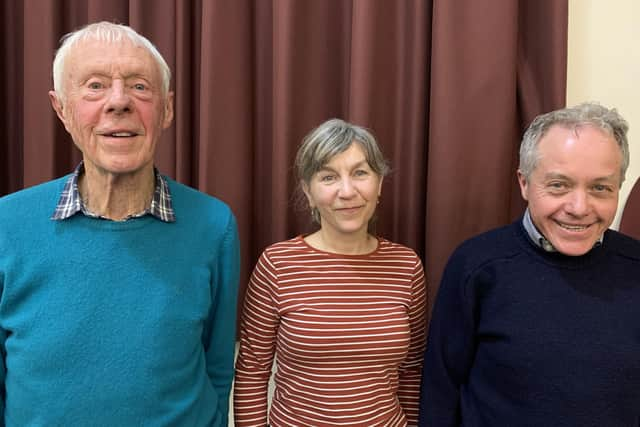

Drawing on analysis of more than 300 research studies, Prof Leach found no reliable evidence that larger or unitary councils deliver greater efficiency or financial savings.
Far from being a straightforward improvement, he warned, reorganisation risks dismantling councils built around communities that people actually identify with.
The financial implications drew criticism from the crowd, including local Green Party member Ceri Mumford, who organised the event.
“The cost of millions of pounds to effectively demolish our own council will fall squarely on the shoulders of local council tax payers,” she said.
"The city council has already been asked to contribute £800,000 to consultants, despite there being no clear public demand for any of this to happen.”
Coun Tim Hamilton Cox, Lancaster City Council’s cabinet member for finance, said: “I am in favour of the creation of unitary authorities to provide more joined-up services to residents, but they have to be ones that maintain an identity with the places they represent.
"There are many examples of successful unitary authorities with populations of 200k or less. The Government mandated that the populations of new unitaries should be at least 500k initially; then 350k, where councils could make a good case.
"I don’t believe that population should be the driver of such significant change and the public consultations showed no support for new councils on this scale and at such remoteness from residents.”
Councillors and attendees also raised concerns about the pace of the process.
Coun Paul Stubbins, backed by almost unanimous support from those present, argued that the reorganisation should not be rushed, and that if change is to come, it must be done properly.
Prof Leach reinforced this point, noting the cautionary example of Cumbria, which went through a costly and time-consuming reorganisation just two years ago, only to now face the prospect of doing it all over again.
City and county councillor Gina Dowding highlighted a further risk: that the sheer demands of managing reorganisation are already consuming vast amounts of councillors’ and officers’ time, leaving councils unable to take major decisions whilst this decision is being made, a recipe, she argued, for institutional paralysis at exactly the wrong moment.
Last November, all Lancashire councils voted on their preferred number of new unitary authorities, with responses ranging from two to five, yet rather than narrowing down the options, the Government launched a fresh consultation covering all possibilities.
Retaining the current council structure is not among them.
The deadline for responding to the Government’s consultation is March 26.