


Here are eight fascinating facts about your wonderful city and town that may surprise you…..
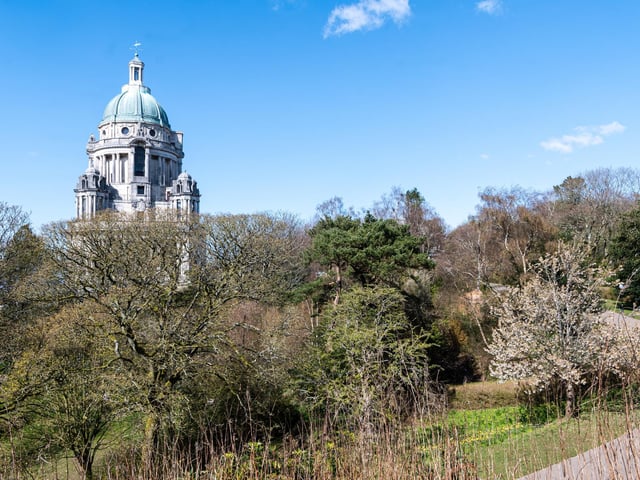
5. Ashton Memorial, Williamson Park, Lancaster.
The Ashton Memorial in Williamson Park, Lancaster. The Ashton Memorial is one of the most interesting buildings in Lancaster; situated in Williamson’s Park and with a romantic history of having been built in the memory of Lord Ashton’s wife, it is the site of many a marriage. But the hill on which it is built has a much more sinister history than you might expect. Prior to 1800, all executions in the county of Lancashire took place on Gallows Hill in this idyllic park. It was here that nine out of ten of the Pendle witches were hung in 1612 (the other met her fate in York). The hill gives a glorious view out to the Morecambe Bay and it is almost impossible to imagine that such a place could have such a murderous history. Photo: Kelvin Stuttard. Photo: Kelvin Stuttard
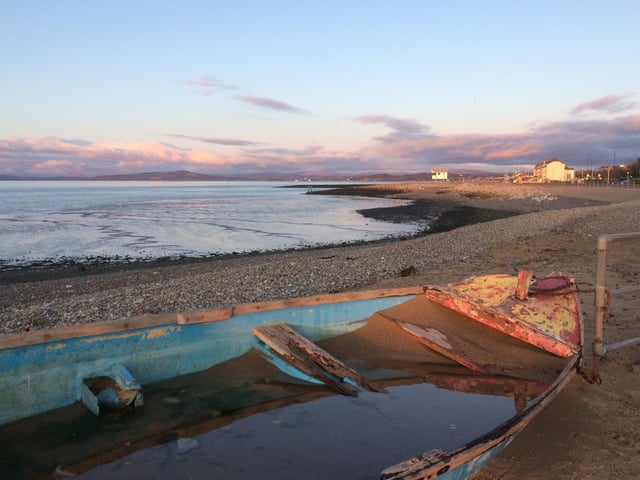
6. Blue skies over Morecambe Bay
Blue skies over Morecambe Bay By Janette Wright of Bolton le Sands. Morecambe Bay is so called because historian John Whitaker suggested in 1771 that it was the Morikámbē tidal flat described by Greek geographer Claudius Ptolemy (died c170 AD). Photo: Janette Wright
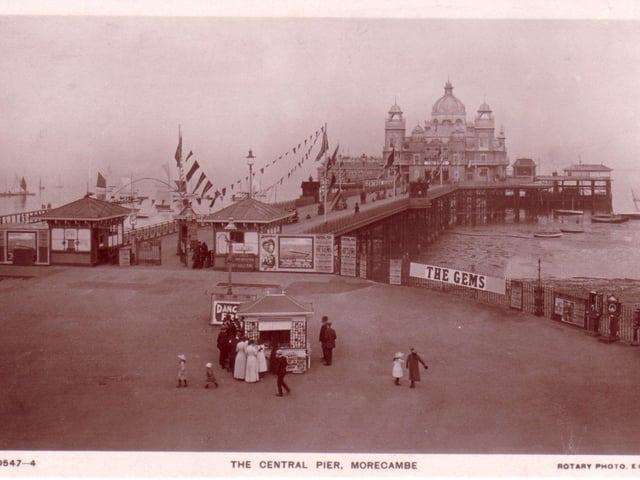
7. Morecambe Pier pictured in 1914 from Lancashire’s Seaside Piers by Martin Easdown
Morecambe Pier pictured in 1914 from Lancashire’s Seaside Piers by Martin Easdown. Did you know that John Osborne wrote the gritty Midlands drama that became Look Back in Anger while comfortably ensconced in a deckchair on Morecambe pier? He was appearing with a repertory company in the play Seagulls Over Sorrento there in the early summer of 1955, and penned the first draught of the largely autobiographical piece in just 17 days. Photo: n/a
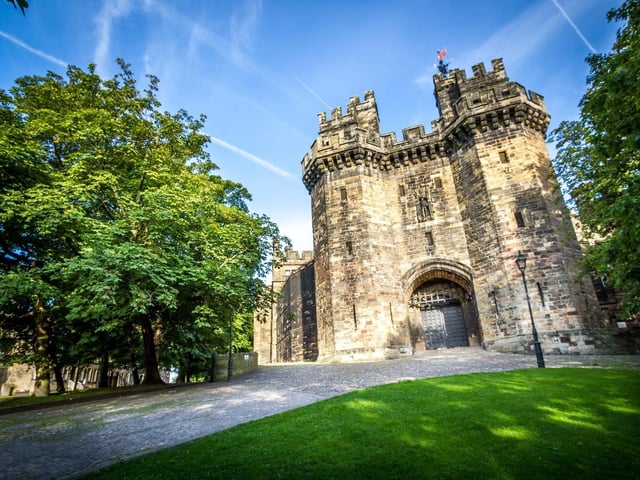
8. The Castle, one of Lancaster’s magnificent landmarks. Photograph reproduced by kind permission of the Duchy of Lancaster
The Castle, one of Lancaster’s magnificent landmarks. Lancaster castle was used as a prison ever since the late 12th century. One of the most remarkable Lancaster Castle facts is that the first mention of the castle being used as a prison came in the year 1196. This means that the castle has an extensive history as a prison as well since the HMP Lancaster was only closed in the year 2011. The castle is still being used as the administrative offices of the Lancashire County Council and as a Crown Court in some parts of the building. The entire complex is, however, owned by the British sovereign as Duke of Lancaster. Photograph reproduced by kind permission of the Duchy of Lancaster Photo: sub