
City council wins appeal over 644-home plan in ‘flood risk’ area of south Lancaster
Lancaster City Council has won an appeal against developers who wanted to build 644 homes in south Lancaster.
Lancaster City Council refused Gladman Developments permission for the 97-acre housing development on land north-east of Bailrigg Lane in December 2023.
The authority had concerns around infrastructure provision in relation to highways safety, the quality of the scheme’s design, the potential for shadow flicker from a nearby wind turbine, and flooding.
However, Gladman refuted the reasons for refusal and argued that the scheme should be approved given Lancaster’s housing supply position.
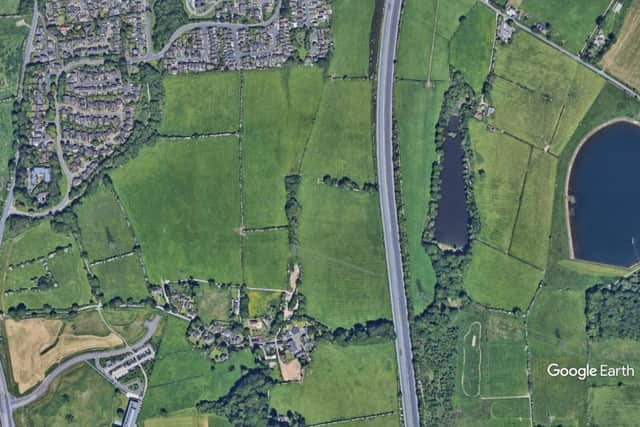

But planning inspector Helen Hockenhull agreed with the city council after a five-day inquiry held last month, and the decision has now been released saying Gladman failed in their efforts to overturn the original decision.
Failure to undertake sufficient flood risk assessment meant the inspector dismissed the appeal completely.
The appeal was split into two parts, looking firstly at whether the proposal would provide innovative, high quality urban design and sense of place, addressing the topography constraints of the site and its influence on site layout, water management, landscaping, energy and noise mitigation; and whether the site is sequentially preferable in terms of flood risk.
The second part looked at whether the proposed link road in isolation would have a significant adverse effect on highway safety.
The inspector concluded that the absence of a Sequential Test for flood risk provided “a clear reason for refusing the development proposal”.
A Sequential Test seeks to steer development to areas with the lowest flood risk. Councils can refuse planning permission if other, lower risk, sites are identified as part of the sequential test search process.
The appeal decision noted that there was a shortage of housing within the district, and that the need for more housing was a matter that attracted “substantial weight”.
Similarly the inclusion of other benefits, including open space and community facilities, and the economic benefits arising from construction jobs, were amongst factors that were given weight in the inspector’s decision.
However the lack of a Sequential Test meant that the inspector considered that there was no alternative but to refuse the appeals.