
Buddhist meditation centre plans for former Lancaster city centre restaurant
Retrospective plans for a Buddhist meditation centre have been submitted to the city council.
Kadampa Meditation Centre has applied for a retrospective application for change of use for a centre with ancillary short-term residential retreat accommodation.
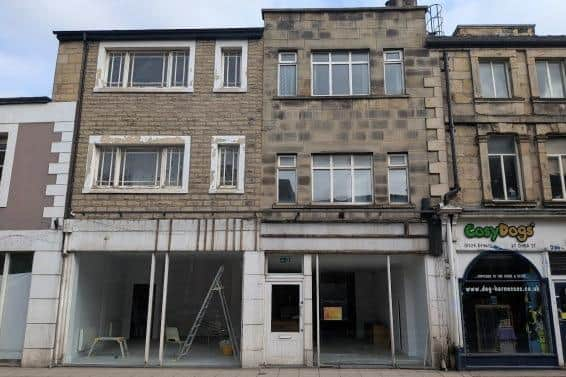
The centre opened at 31-35 China Street in Lancaster after the closure of Nami Sushi restaurant.
"We’re excited to open our new space filled with many books giving practical guidance to Buddhist wisdom for modern daily life, inspirational gifts, natural handmade soaps and calming incense for mindfulness and daily wellbeing,” they said at the time.

The Kadampa Meditation Centre Lancaster, (previously known as Chenrezig Kadampa Buddhist Centre) is a registered charity and functions to promote the teachings and meditation practices of the Mahayana Buddhist Tradition of Atisha and JeTsongkhapa.
The purpose of the meditation centre is to offer an environment in which people are inspired to meditate and study Buddha's teachings and follow a meaningful and spiritual way of life.
The applicants are a Buddhist (religious) community with people attending classes, meditation sessions and prayers from all over the County, but predominantly Lancaster, Heysham, Morecambe, Garstang and Carnforth.
The centre has been operating as a centre of meditation and worship for more than 22 years in Lancaster, previously based 93 King Street.
The centre is not limited to practising Buddhists but is open to all, including those wishing to attend classes and study programmes. One of the primary purposes in acquiring the more prominent China Street premises is to raise the profile of the centre to further encourage more visits by non-Buddhists, for people just seeking a place of serenity for quiet contemplation or mediation
The proposal seeks to repurpose the building as a Buddhist Meditation Centre, comprising a principal meditation hall and communal worship space on the ground floor, with a smaller meditation room and kitchen facilities on the first floor, and accommodation on the second floor made up of four bedrooms to support short-term residential stays for individuals undertaking structured meditation retreats, study, or religious practice, together with a bathroom.
One room with an en-suite bathroom is allocated to a resident teacher for overnight stays who also acts as manager for the site.
A statement to the council planning officers says that the development “aligns with national and local policy objectives to promote vibrant town centres”.
"The use will provide a valuable community and spiritual facility and maintain an active ground floor use, preferable to another empty shop unit in the town centre,” it said.
"The development incorporates robust safeguards to control and manage the residential accommodation which clearly distinguishes it from conventional HMO (housing of multi-occupancy) development planning policy."
Councillors will discuss the plans at a future planning committee meeting.