
Search for families of Lancaster’s Dr Buck Ruxton murder victims after skulls find
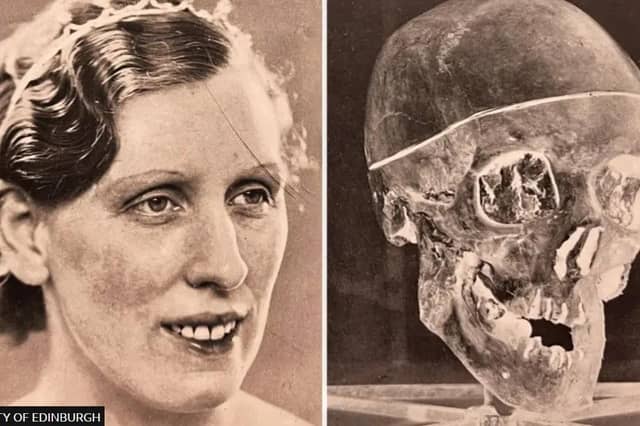

A search has been launched for the families of two women killed 90 years ago in the Buck Ruxton Jigsaw Murders in Lancaster, after their skulls were rediscovered in a university storeroom, reports the BBC.
The deaths of Isabella Ruxton and Mary Rogerson, whose bodies were found in Moffat, Dumfries and Galloway, made headlines around the world in 1935.
The case broke new ground in forensic science when Edinburgh University helped build evidence against Dr Buck Ruxton, who was hanged for his wife’s murder.
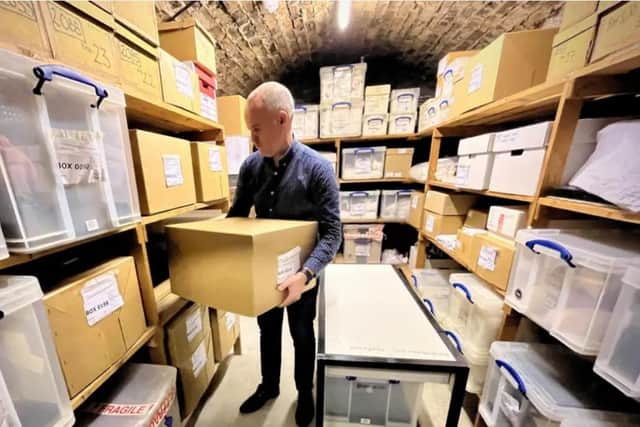
The university has now discovered that the skulls and other bones are still in its archive.

It is trying to trace the women's relatives to ask if they wish these to be returned.
The assumption is that they were retained for further medical research.
Professor of anatomy Tom Gillingwater said: "We want to do the right thing by Isabella and Mary and, if appropriate, return them to their families so they can be laid to rest."
It is not known whether Isabella and Buck Ruxton’s three orphaned children were ever told that their father had been hanged for murdering their mother.

Mary Rogerson is known to have relatives in the Morecambe area, while Isabella's sister Jeannie Nelson was living in Edinburgh at the time of the murder.
Prof Gillingwater said: “The guidance was very clear, that we should not be approaching people who may not be aware that they were related to these ladies," said Prof Gillingwater.
"If there are any relatives of Isabella or Mary who believe that they would like to have the remains returned to them, we would be delighted to talk to them about what the next steps might be."
The university says any discussions will be held in strictest confidence and the families should not feel under pressure to come forward.

They can make contact through a section on the university's website at https://www.ed.ac.uk/c/isabella-ruxton-and-mary-jane-rogerson
The killings - which became known as the Jigsaw Murders - took place in Lancaster in September 1935.
Newspaper reporters flocked to Dumfries and Galloway after dismembered and disfigured human remains were discovered beneath a bridge over a stream near Moffat.
The remains were sent to Edinburgh University, where forensic scientists and colleagues from Glasgow University pieced together the body parts.
As they carried out their gruesome task, another investigation was under way in Lancaster.
Dr Buck Ruxton had given various explanations for the disappearance of his wife Isabella and their nursemaid Mary Rogerson.
Mary and Isabella were reported missing by Mary's family, not by Ruxton.
Investigators in Scotland made the link between the two women and the remains which were found near Moffat.
Ruxton’s efforts to avoid justice were defeated by groundbreaking forensic techniques which confirmed the remains were those of Isabella and Mary.
The identification was crucial to the prosecution case in what was described as "the trial of the century”.
Ruxton went into the dock at the Assize Court in Manchester five months after the bodies were found.
Ruxton was convicted of murdering his wife. He had also been accused of killing Mary but the charge was dropped before the trial.
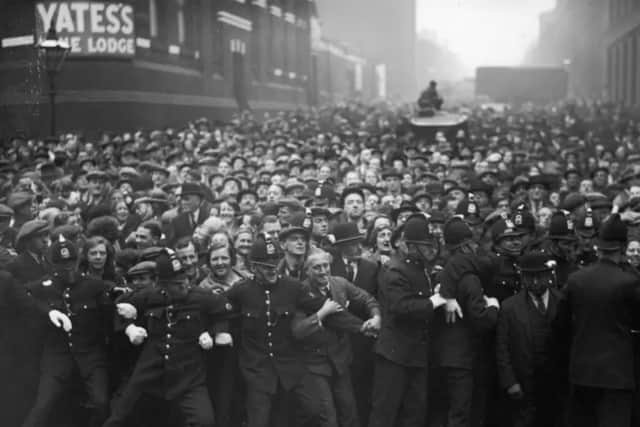
Two months after he was found guilty, huge crowds gathered outside Manchester's Strangeways Prison when he was executed by hanging.