
Shaun said: “We are all accustomed to looking up businesses and people on the internet these days, but in the pre-internet days there were only the newspapers and trade directories to help you.
"One such was Mannex’s directories which seemed to start around 1849. The earliest business and local directories started to appear in the 1760’s. Most counties were covered, and a lot are now online.
“The idea was that anyone of note (or who thought they were) would apply to the publishers to be listed and pay a small subscription.
“The resulting directory would be issued to subscribers for a fixed price, in this case 6 shillings and 6 pence.
“I had the good fortune to acquire one from 1881 and there are a few of Lancaster’s businesses of that time (adverts appeared before and after the listings and were doubtless extra)
"There is also a large ‘essay on the science of geology’ which is there mainly to refute the theories of Charles Darwin.
"A well-known name to begin with is Gillows, and the advert lists all their offices and works.
“The advert refers to Parquet floors which date back to 16th century France. Parquet and wood floors in general lost their appeal in the 1930s due to the invention of carpet and lino floors.
"A magnificent full-page advert is that for George Greenhall Pianos of Church Street. The pianos would have been out of the reach of most people however.
“In the middle years of the 1880s, the adult male average wage was £56 while the average wage for all workers was £42/14/-.so it would have taken a while to get a piano (a guinea is
one pound one shilling) however they were tremendously popular for the wealthier home.
“George also sold sheet music and other instruments (such as organs) as well.
"In 1881 George was listed in the census as employing seven men, a boy and a woman.
"He was married with two children aged 20 and 17. Sadly he died on December 23 at 75 Church Street. He left £1,055.”
Shaun said that near the river Lune on St George’s Quay was the chemical works of Joseph Hemingway.
Joseph was born in 1852, (his father was a pawnbroker) and learnt his trade under Professor Frankland, matriculating in 1869.
In 1871 he was a chemist’s assistant but seems to have gone into business on his own account making bleaching soap and other cleaning chemicals.
Shaun said: “In July 1879 he was forced to produce a grovelling apology to S Hemingway of Bradford for infringement of their trademarks. I have found no records of Joseph after 1881.
"Another advert aimed at the more affluent was that of Gilchrist’s Coach builders.
"The actual works was on Meeting House Lane opposite the Friends Meeting House.
"The works later became the Lune Valley Engineering Works (run by Jack Kitchen the inventor and engineer) before becoming home to the Lancaster Technical Institute Workshops.
"During World War Two along with Storey Institute it was used for the production of parachutes. It later became a Sawmill and workshop for Gillows. It then became Wheatfield St Workshops, part of Lancaster Art College, in the early 1970s.
"In the courtyard behind was the pottery department and design studio. The building still exists.
“On Nelson Street -where car parks and flats are now -was the Pearson and Knowles Coal and Iron co. the map below from 1891 shows where the coal yards and wharf were.
"The aptly named Joseph Lancaster was carrying on his building business from a yard on Dalton Square and his house at 20 Marton Street (the street is now largely taken up by the
police station)
“The census shows him as employing two men and two boys and his two oldest sons were also stonemasons.
"Tragedy had struck in late December 1873 when Joseph’s youngest son Thomas had died at the age of six.
“Joseph himself died aged 59 in 1891 still living at 20 Marton Street.
“The relatively new science of photography was well represented in Lancaster. Davis & Sons had premises at Market Street Chambers, Lancaster.
"’Carte de visit’ were business card size pictures of yourself left as calling cards when on the social round.
"John Davis & Sons photography firm (who had a carte de visit) took on the business of Mr J Bells artists repository on New Street in Lancaster shortly before the directory was published.
"The photography firm flourished for many years, and in January 1906 the business was taken over by John’s son Thomas Storey Davis.
"In 1908 the firm were summoned to Abbeystead House to photograph the royal shooting party comprising the parties of the Prince of Wales and the Earl of Sefton.
“The last mention of the business in the papers was 1910.
“Finally, an advert that looks Victorian is that for Joseph Howard of St Leonardgate.
“This was in fact published in 1930.
“Adverts appear in every issue of the Lancaster Guardian up to 1945 for the Howards, by which time the firm were agents for the London Horse meat company of Willesden London.
"There are many more adverts to be seen and I hope to bring you more of them.”
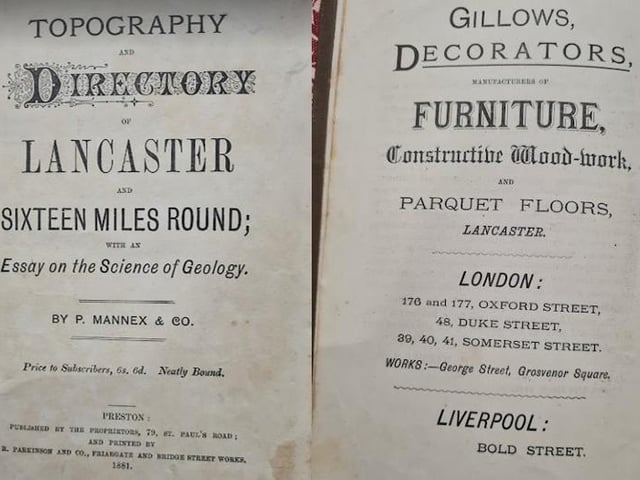
1. Lancaster Trade Directory 1881
The essay on the science of geology and the Gillows furniture advert which appeared in the Lancaster Trade Directory 1881. Photo: Shaun Corkerry
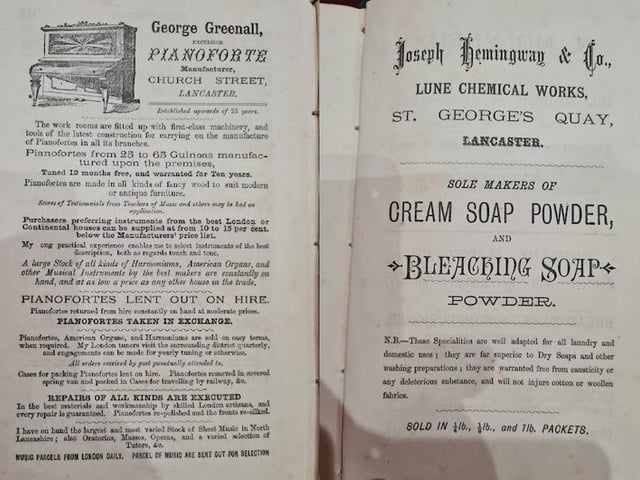
2. Lancaster Trade Directory 1881
A magnificent full-page advert is that for George Greenhall Pianos of Church Street and an advert for Joseph Hemingway and Co. Photo: Shaun Corkerry
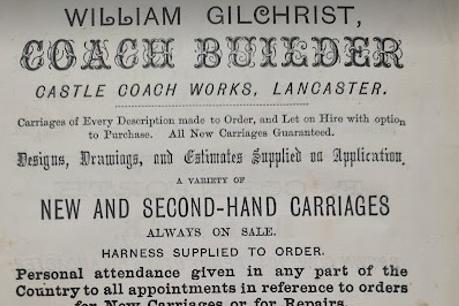
3. Lancaster Trade Directory 1881
Another advert aimed at the more affluent was that of Gilchrist’s Coach builders. Photo: Shaun Corkerry
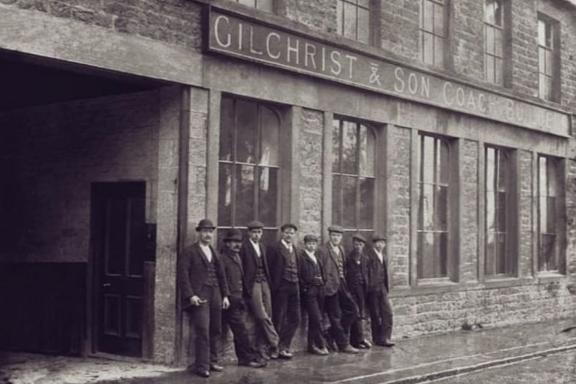
4. Lancaster Trade Directory
Gilchrist & Son coachbuilders works was on Meeting House Lane in Lancaster. Photo: Lancaster Past and Present. Photo: Lancaster Past and Present