
Lancaster’s Forton Services among UK’s beautiful brutalist buildings
Lancaster's Forton Services has been named among the most beautiful brutalist buildings in the UK, featuring 14th on a list compiled by Making Moves London Ltd office rental agency.
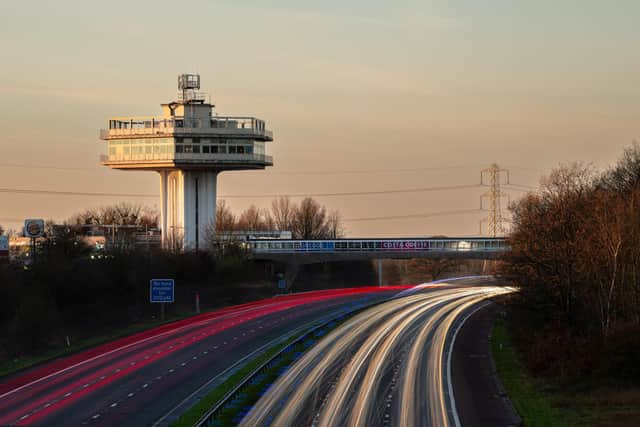
Forton Services is a standout example of post-war roadside architecture, reflecting the bold design approach of the 1960s.
Built to serve the growing motorway network, it captures a moment of rapid change in how people travelled.
While opinions on the structure have shifted over time, it remains a notable part of the wider Brutalist conversation, highlighting the ambition behind infrastructure design during this period.

Making Moves set out to rank the UK’s most beautiful brutalist buildings, with The Barbican taking the crown for first place.
To create the ranking, a score was calculated using factors such as architecture awards, TripAdvisor ratings, the number of Instagram hashtags, and Google search volume.
Forton Services is number 14 on the Making Moves list with 520 points.
The services opened in 1965. The architects who designed the Grade II listed building were Bill Galloway and Ray Anderson.
Forton Services is a motorway service station between junctions 32 and 33 of the M6, with the closest city as Lancaster.
The service station was named after the nearby village and was the second service station to open on the motorway.
The services are notable for an unusual hexagonal concrete tower, named ‘The Pennine Tower’, which initially featured a restaurant and a sun deck.
The tower was designed to resemble an air traffic control deck.
The Pennine Tower of the services has been likened to a ‘spooky Star Wars tower’ and was once the tallest motorway restaurant in the country.
Today, however, it isn’t currently in use and is closed to the public, however you can still visit and observe the tower from the outside.
Brutalist architecture is an architectural style that emerged during the 1950s in the United Kingdom, among the reconstruction projects of the post-war era.
Brutalist buildings are known for minimalist construction showcasing the bare building materials and structural elements over decorative design.
The style commonly makes use of exposed, unpainted concrete or brick, angular geometric shapes and a predominantly monochrome colour palette; other materials, such as steel, timber, and glass, are also featured.
Visit https://makingmoveslondon.co.uk/blog/britains-most-beautiful-brutalist-buildings/ for Britain’s most beautiful Brutalist buildings.