
But in the process an entire street – St Nicholas Street – disappeared. Like many others I wondered what happened to the small Unitarian Chapel in St Nicholas Street.
In 1875 the Lancaster Gazette gave an insight into the Chapel and its origins, and this begins by affirming that there was a chapel in St Nicholas Street from around the 1650s.
Backing that up John Greenwood -the Mayor of Lancaster 1687-8- founded the Presbyterian meeting house according to the biography of William Stout. Greenwood died in 1701.
It was noted that in 1784 that this chapel was dilapidated and in need of rebuilding.
The building of the new chapel was therefore started around 1786 and was by subscription.
The Lancaster Gazette quotes the 1820 edition of the Lonsdale Magazine as saying "This building is situated on the south side of St Nicholas Street and was built -on the site of a former one- by Thomas Taylor. It is capable of holding around 300 persons….the Rev William Lamport of the St Nicholas Street academy is a minister of this Church.”
Originally the Chapel was used by Presbyterians but following a doctrinal spilt, they left for High Street Chapel, and from around 1772 the St Nicholas Street Chapel was used by the Unitarians. The Unitarian movement was relatively new as it only became a formal denomination in 1774 and official toleration came along in 1813.
The Lancaster Gazette of August 1890 further tells us: “The Chapel was originally built in 1662, re-built in 1780 and enlarged in 1874.
"The work of decoration has been executed by Messrs Eaton and Bulford of this town. The Chapel ceiling which is elaborately panelled out in plaster work is treated in a warm vellum tint….The Chancel or Apse ceiling is divided into eight panels on a ground work of deep blue….In the apse of the Chapel are three stained glass windows, the centre one being a memorial to two worthies who will never be forgotten by the Lancaster Unitarians….William James Lamport who died in 1874 aged 59 and Daniel Gaskell who died in 1875 aged 93.”
These windows can all be seen in the 1964 photos of the Chapel.
In 1874 the Lancaster Gazette said: “The square house by the gateway in St Nicholas Street was formerly the residence of the officiating minister.
“The restoration of the Chapel has been effected in the last three of four years, all the old wood work, the former pulpit and square corner pews have been cleared away…whilst an extensive apse
has been thrown out on the western side.” (this is the curved protrusion at the end of the Chapel)
The organ was stated to be French and made in 1855, it was apparently water powered.
The Chapel contained memorial tablets to Robert Gawthorpe who died in 1844 at Lune Villa, and others to the reverend William Lamport (senior), and the Rev Franklin Baker who died at Caton.
At the southwest end of the chapel was a marble tablet in memory of John Armstrong and some family members including Richard Baynes Armstrong (1789-1867) and James Noble -who all established and maintained the silk industry at Galgate.
As was common there were wall mounted boards on which were displayed the Lord’s Prayer, the sermon on the mount and other texts.
A narrow back alley from Gage Street gave access to the school house.
Following the decision to demolish St Nicholas Street the last service at the Chapel took place in Late March 1965.
The Unitarian church was then relocated to a new site in Scotforth and this is now Rowley Court, a community space and events centre.
Two of the windows from the old chapel were moved there and can be seen to this day. These both date from 1913 and 1902. Sadly, neither can be seen in the pictures from the 1960’s.
As to where the remains of the chapel and graveyard are - in today’s terms they would be under the multi-storey car park which is in turn under Boots and Superdrug.
It is a great shame the Chapel is now lost to us, it would be marvellous to have walked around it in its glory!
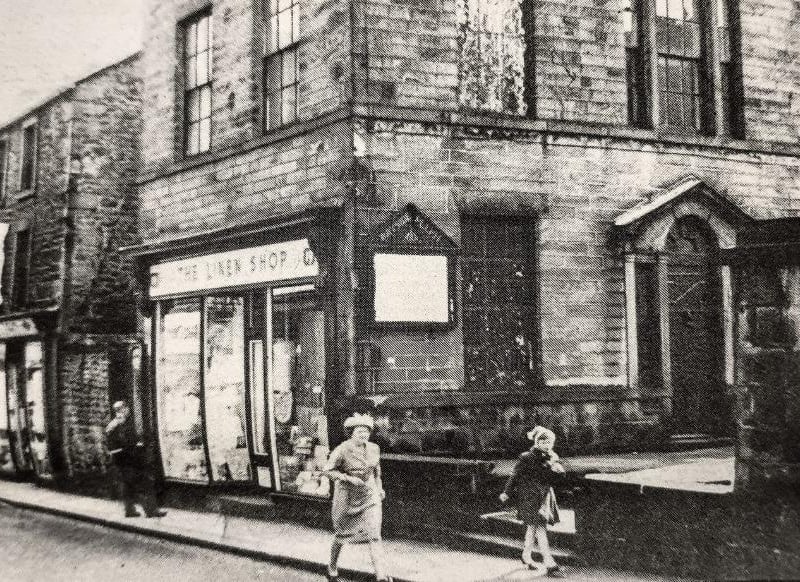
1. Lost chapel
1965-the entrance to the chapel from St Nicholas St-directly opposite the Boar’s Head Pub. Photo: Shaun Corkerry. Photo: Shaun Corkerry
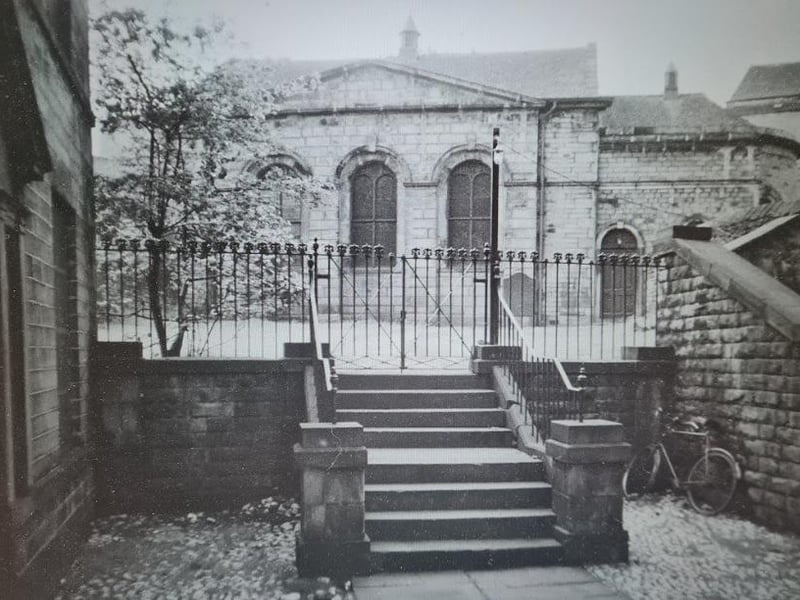
2. Lost chapel
The Chapel c1964 going up the steps. UXC01/01/01/0159/10 St Nicholas Chapel Lancaster (Historic England). Photo: Historic England
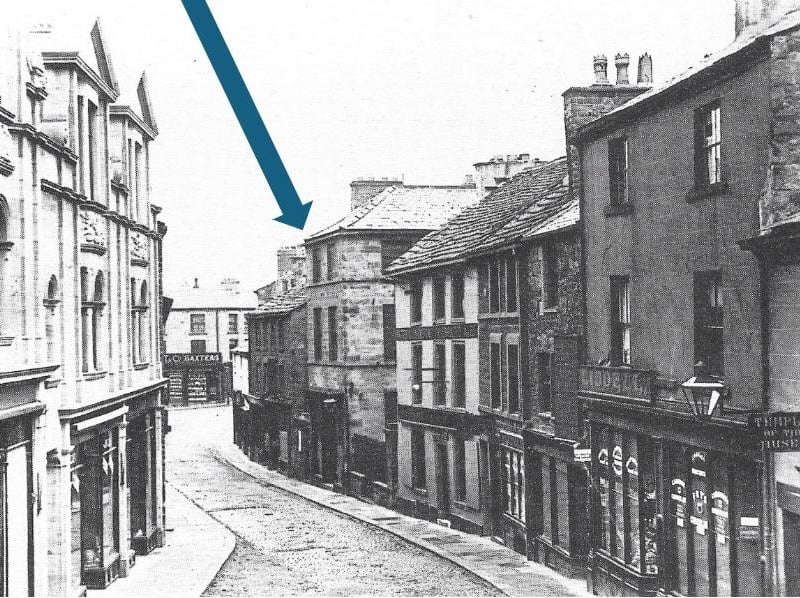
3. Lost chapel
Looking down the street towards Stonewell around 1900-entrance arrowed. The house arrowed was the Ministers residence for many years. Photo: Shaun Corkerry. Photo: Shaun Corkerry
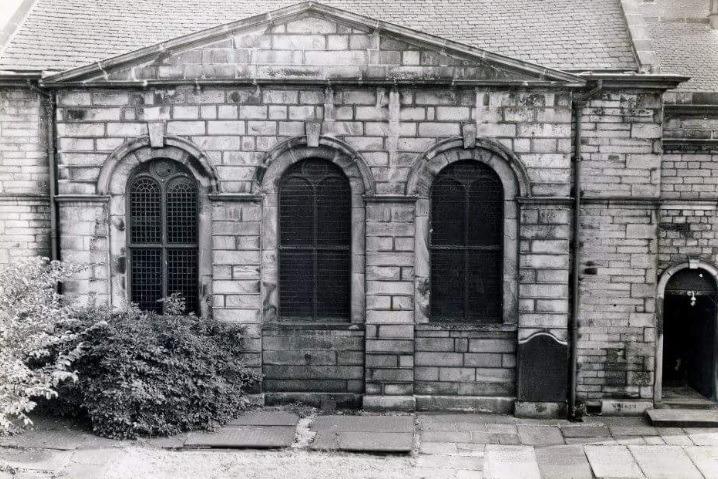
4. Lost chapel
The headstones laid flat c September 1964. Behind the Chapel was a Sunday School -Two of these three visible windows are preserved today. (Lancaster City Museum). Photo: Lancaster City Museum