
Help protect Lancaster Canal by joining volunteers who keep waterway clear of weeds
Canal & River Trust is calling on people to help protect their local waterway by joining the volunteers who help keep the nation’s canals clear by removing fast‑growing aquatic weeds.
Every year, volunteers join “balsam bashing” sessions and floating pennywort removal parties along the 2,000 miles of canals and rivers cared for by the charity. Their efforts are essential in tackling invasive plants that can quickly take over waterways, blocking boats, trapping litter and harming wildlife.
With the spring heatwave providing perfect growing conditions for the invasive plants, the need to tackle the weeds is greater than ever, Canal & River Trust is running volunteer events throughout the summer.
Volunteers from the charity’s Towpath Taskforce have recently carried out balsam bashing and pennywort removal to help manage invasive species on the Lancaster Canal.
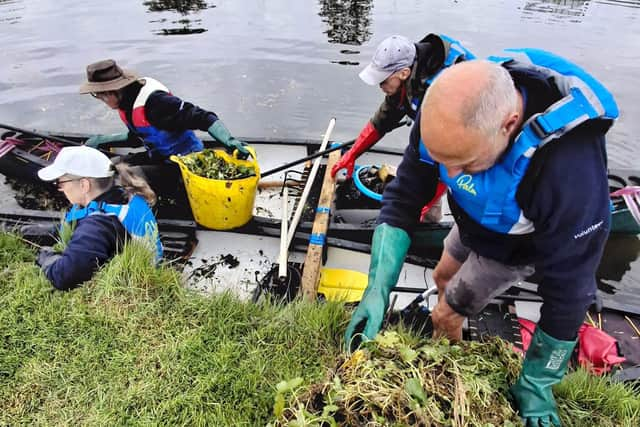

Peter Morrison, volunteering leader at Canal & River Trust, said: “Invasive species like Himalayan balsam and floating pennywort are a massive headache for our charity every summer. One of the best ways to remove them is by hand, which is a time consuming and painstaking but hugely important task.
"We simply couldn’t do this work without the time, tenacity and passion of our amazing volunteers. Getting involved is fun, sociable and makes a real difference to the places people love.”
Every summer invasive species such as floating pennywort, Himalayan balsam, water fern, and fast‑spreading duckweed, begin to grow rapidly.
Some can double in size within hours, forming dense green mats that clog the nation’s waterways. Some of the weed species are non-native and highly invasive.
Thick layers of weed can block out sunlight, reduce ecological diversity and deprive the water of oxygen, harming aquatic life. Canal & River Trust removes over 2,500 tonnes of invasive weed across canals and river navigations, at a cost of more than £1 million, every year.
To stay on top of the problem, the Trust uses a mix of approaches. Weed‑harvesting boats help to remove large quantities from the water, while hand‑removal by volunteers remains vital, especially in hard‑to‑reach spots. Ecologists in some regions release specialist weevils that feed on floating pennywort and water fern: a natural, chemical‑free way to control these plants.
“Climate change is extending the growing season for these plants, so the more hands we have, the better,” added Peter. “Our canals are precious spaces for millions of people and home to some of our best‑loved wildlife. Helping out for even an hour can make a big difference and we’d love more people to get involved.”
For more information on how to donate or volunteer to help protect your local canal, visit https://canalrivertrust.org.uk/