
Generous supporter gifted £320k to Lancaster theatre
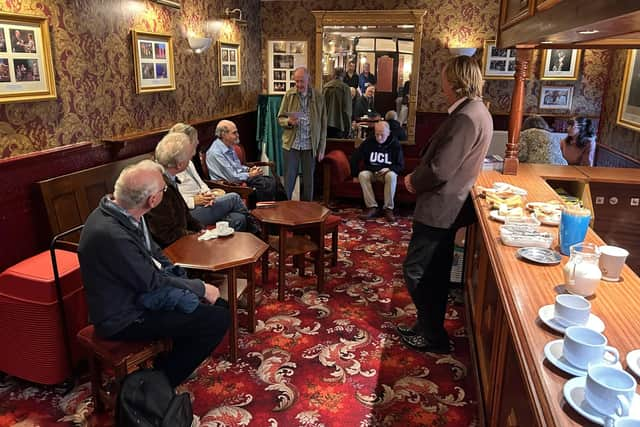
Friends, neighbours and members of the Lancaster Footlights and Grand Theatre charity gathered to remember and celebrate the extraordinary life of lifelong supporter of the theatre and generous benefactor Ronald Anthony ‘Tony’ Yates.
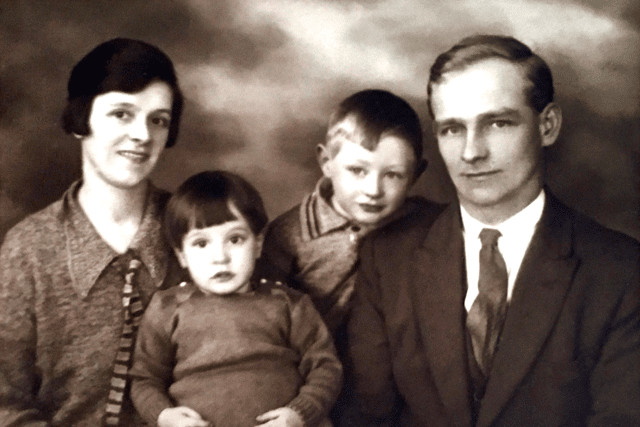
Tony Yates was born in Burnley on July 11 1925 and moved to Lancaster as a young boy with his parents, Robert and Ida, and his brother Frank.
His father worked for the railway, initially as a fireman before becoming an engine driver and later an inspector, and the family were part of Lancaster’s traditional working-class community.
Tony attended Lancaster Boys’ Grammar School before briefly working for Storeys at White Cross and later joining the Royal Navy during World War Two.

At just 18 years old, Tony was serving as an Able Seaman aboard a Royal Navy minesweeper during the D-Day landings on June 6 1944.
His vessel was involved in clearing mines and opening safe channels for Allied shipping as the invasion of Normandy began.
Tony was seriously wounded during the fierce action that followed.
Speaking of Tony’s service, friend and neighbour Donald said: “My erstwhile friend and neighbour, Ronald Anthony Yates, who died in 2015, was wounded at D-Day (June 6 1944) aged 19. He was an able seaman on the first Royal Navy warship, a minesweeper, into Calais harbour clearing mines so that the allied shipping could enter safely.
“The Nazis shelled his ship heavily; despite the ferocious attack and consequential casualties it continued operations, undaunted, until completed, when other ships were then able to enter the harbour and help return fire. He remarked to me that on that day, as far as the eye could see, on the waves there was a sad swell of floating bodies.”
Following the war, Tony returned to Lancaster and received a further education grant which enabled him to pursue his passion for drama.
He trained at the Northern Theatre School in Bradford and later studied movement with renowned dance and movement theorist Rudolf Laban.
It was during this period that Tony became involved with the Lancaster Footlights Club at the Grand Theatre, where he developed a lifelong love of the theatre and formed friendships that would remain with him throughout his life.
Among his contemporaries and friends were a number of future household names, including Bernard Cribbins, Dame Judi Dench, Bryan Mosley and Frankie Vaughan.
Tony himself was considered by his tutors to have the potential to become a major West End performer.
His career in theatre took him across the country.
Alongside fellow theatre enthusiasts, Tony was instrumental in helping to establish the Piccolo Theatre in Manchester, which would later become the Royal Exchange Theatre.
He also worked as stage director of the York Mystery Plays, where a young Judi Dench was among the performers.
During his work with the York Mystery Plays, Tony was presented to the Queen. When asked what he did, he reportedly told her that he spent half his time trying to control his fellow actors and the other half trying to control himself, an answer which greatly amused Her Majesty.
Despite his considerable talents as a performer and director, Tony ultimately chose a career in drama education.
He became Drama Advisor for Durham Education Authority before taking up a Senior Lectureship at Scraptoft Campus in Leicester, now part of De Montfort University.
He remained in education until his retirement, eventually returning to Lancaster, the city he had called home since childhood.
Tony never lost his connection with the Lancaster Footlights and Grand Theatre.
His relationship with the theatre spanned decades, with his involvement extending both on stage and backstage.
Former Chairman of Lancaster Footlights and Grand Theatre, Mike Hardy, gave an address during the gathering, reflecting on Tony’s longstanding relationship with the charity and the important contribution he made to its history.
Following his death in 2015, Tony left an extraordinary legacy gift of £320,000 to Lancaster Footlights and Grand Theatre, helping to secure the future of the charity and support generations of performers and theatre-goers to come.
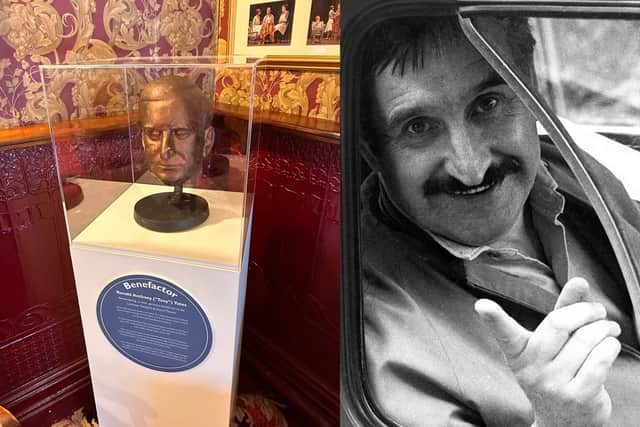
To commemorate his remarkable life and contribution, Tony’s bust is now on permanent display in the Circle Coffee Bar at Lancaster Grand Theatre, accompanied by a plaque celebrating his life and expressing the charity’s gratitude for his extraordinary generosity.