
There were disastrous storms and floods in the Lune Valley in 1891 and 1892.
The following text is taken from an account of the floods written by Rev. C L Reynolds.
Rarely has such a storm of wind and rain been experienced in Lancaster and the surrounding area as that which prevailed in the early part of the present week.
Rain fell incessantly from Monday evening till an early hour Wednesday morning, the result being that the River Lune was in a state of flood from Tuesday morning.
The volume of water coming down was immense and it is said that no such flood has occurred in the Lune Valley since the memorable December 26 1852, when some of the banks were swept away, and an extraordinary amount of damage was done.
On Tuesday afternoon the islands below Skerton weir were submerged and as far as the aqueduct there was one level sheet of water resembling a lake.
The Ladies Walk was rendered impassable and the water also got on the Midland railway line under Skerton bridge.
Railway trains had to rush through the water, and in one instance an engine fire was put out.
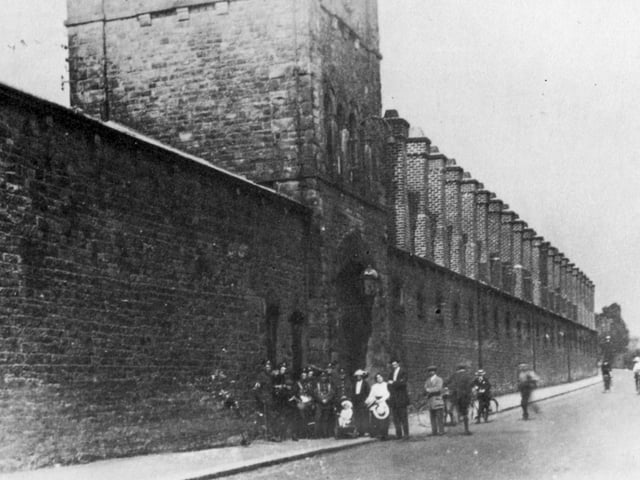
The smith’s shop at the wagon works was also flooded through the overflowing of a brook that runs underneath the works, and employment had to be abandoned owing to the fires being put out.
The flood also caused a cessation of work at Skerton Mill. At Melling the land was flooded right up to Kirkby Lonsdale and extended a mile in breadth.
Traffic in the road was stopped, the water being four to five feet deep.
At Arkholme, Mr Cragg and Mr Kirkbride had some difficulty in removing a lot of stock from some low lying ground, having eventually to drive them onto the railway and thus delay the traffic or
otherwise let them drown.
At Kirkby Lonsdale the island was covered, and a number of sheep and poultry washed away, the sheep being recovered about a quarter of a mile lower down the river.
Right through the Lune Valley farmers and travellers rode about on horseback in search of missing animals since Wednesday morning.
The oldest inhabitants do not remember such floods as were caused by the unusual downpour of rain on Monday and Tuesday.
The gale during Tuesday night did great damage to fruit trees and also blew off quantities of slates.
At Hornby the rivers Wenning and Lune overflowed their banks to an alarming extent. At Gressingham bridge on the highway all traffic was completely stopped.
On Tuesday the post messenger from Hornby to Gressingham was obliged to go by train to Wennington and to Arkholme to get the letters and return the same way, the water being about five feet
deep. Only the top of the hedges could be seen. Great numbers of sheep are said to be missing.
This is said to be the greatest storm and flood that can be remembered, the last of any magnitude being in 1881.
In addition to the disastrous floods the tops of the trees are strewn about in all directions. Among the number is one of the old elms in the avenue at Hornby Castle.
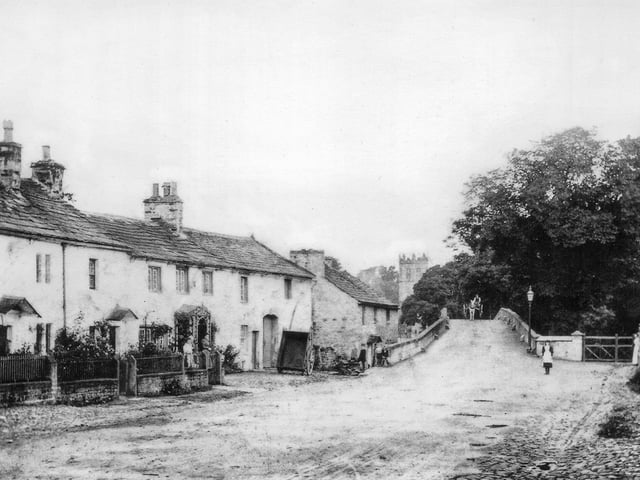
The main road was flooded on both sides of the bridge which crosses the river Wenning. One of the cottages was flooded to the depth of five feet, and others from two feet to four feet.
In Dr Mackay’s drawing room the piano and other furniture were literally floating about the room. The water for the first time ran over the embankment in the castle avenue made by the late W.
Foster Esq. and rushed through the entrance gates, washing a hole nearly a yard deep, so that it was impossible for a conveyance of any description to get to the castle for several hours after the water had subsided.
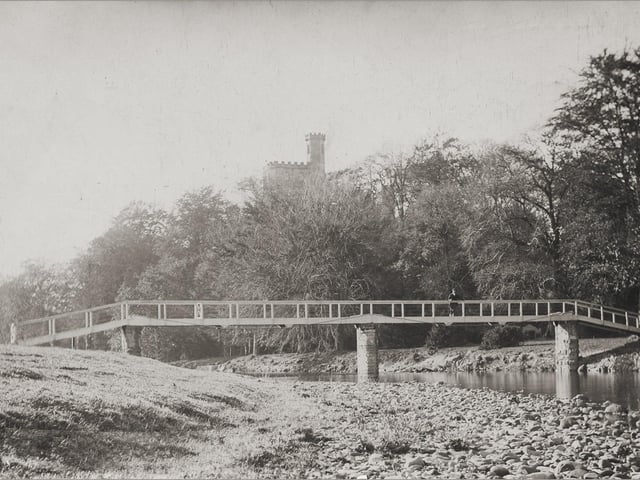
The new bridge recently erected by Col. Foster behind the castle was washed away and the timber and ironwork were left in the “strands”, nearly a mile away.
The greatest damage was however done in the valley of the Roeburn where the rain must have fallen in torrents. At Backsbottom farm the orchard was washed away, and so were the potatoes growing in a garden at the other side of the farm.
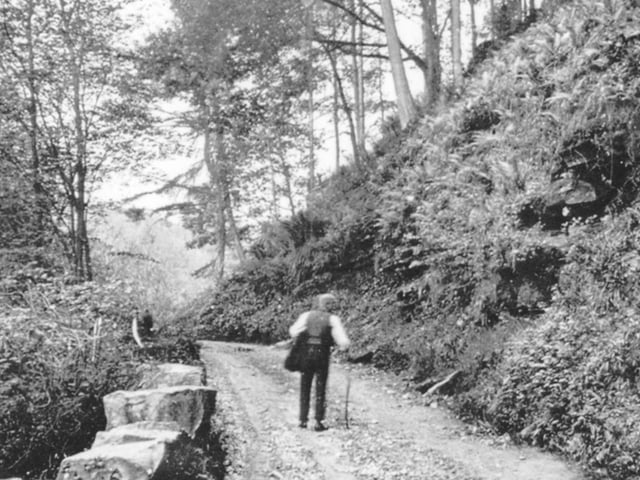
The road leading to the famous Backsbottom quarries was rendered impassable, and a portion of the new bridge which spans the Roeburn was swept away.
One end of the reservoir which supplies Wray and Hornby with water was washed away early on, and about a hundred loads of stone and rubbish deposited in a field occupied by Mr G Dodgson, of Backsbottom farm.
The farm was flooded “inside and out” to a depth of two feet. Fortunately Mr Dodgson did not lose any animals, though he narrowly escaped losing his pig.
When he went to look for it, the farmer found the animal crouched in a corner of the sty with its nose just out of the water. He pulled it out by the ears, and soon got it to a place of safety.
The damage to the road to Backsbottom quarry is disastrous for the village because the quarry is in full work and the completion of a number of orders will now be delayed.
In Wray half the mill weir has been washed away. The water rushed with tremendous force against Smithy Brow, and a considerable portion of the wall behind the smithy was broken down.
The floods in the Hindburn were without parallel within the memory of the oldest inhabitant.
1. Disastrous storms and floods in late 19th century in Lune Valley
The new suspension bridge recently erected by Col Foster behind Hornby Castle was washed away in the floods. Photo: David Kenyon. Photo: David Kenyon
2. Disastrous storms and floods in the late 19th century in the Lune Valley
Main Street, Hornby, 1911. The cottage to the left of the bridge was flooded to a depth of five feet. Photo: David Kenyon. Photo: David Kenyon
3. Disastrous storms and floods in the late 19th century in the Lune Valley
The Lancaster wagon works on Caton Road where the blacksmith's workshop was flooded, extinguishing the forge fires. Photo: David Kenyon. Photo: David Kenyon
4. Disastrous storms and floods in the late 19th century in the Lune Valley
This photograph shows the road leading to the famous Backsbottom quarries that were rendered impassable by the floods. Photo: David Kenyon. Photo: David Kenyon