
Diamond anniversary year for RSPB reserve near Lancaster is off to booming start
2024 marks the 60th anniversary year for RSPB Leighton Moss at Silverdale, RSPB’s ‘jewel in the crown’ reserve and the largest reedbed in the Northwest.
Bitterns, the UK’s loudest bird, are having an incredible start to the season in Lancashire, with the RSPB reporting ten ‘booming’ males at RSPB Leighton Moss in Silverdale.
It is the greatest number recorded on the reserve since the 1990’s.
The Bittern is still considered a rare bird in the UK, but Leighton Moss has played a pivotal role in saving this endangered species.
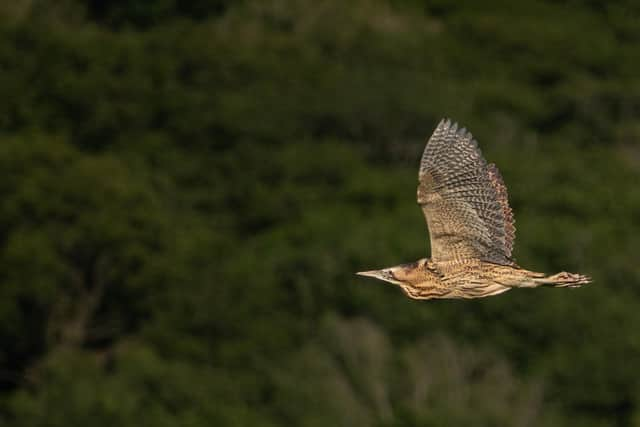

The reserve is home to the largest reedbed in the Northwest, which provides the ideal habitat for the secretive bird.
RSPB Leighton Moss will celebrate its diamond anniversary in May this year, marking 60 years since the RSPB first took on the lease of the land.
Last year was a bumper year for Bitterns at Leighton Moss with nine males heard booming and four known nest sites, but this year has potential to better that with the ten ‘boomers’ having already been heard across the reserve.
Whilst the birds are still moving around and are not yet fully settled into their territories, it’s already looking good for this diamond anniversary year.

Jarrod Sneyd, senior site manager at RSPB Leighton Moss, said: "We’re trying not to get too excited but it’s very encouraging that we’ve heard ten ‘boomers’ so early in the year.
"Their cryptic camouflage and stealthy behaviour can make them very difficult to see, so hearing their booms is one of the only ways we ever know how many there are lurking amongst the reeds on the reserve.
"Every time you step out onto the reserve there’s a Bittern booming, it’s fantastic.”
Bitterns are a type of heron and a reedbed specialist, they can be elusive and secretive, silently moving through the reeds at the water’s edge, searching out fish and invertebrates.

Between February and May, male Bitterns make a low frequency ‘boom’ to mark their territories and attract a mate.
The sound which is not dissimilar to someone blowing across a milk bottle top can be heard up to three miles away.
The Bittern faced extinction as a breeding bird in the UK in the 1900’s due to large scale habitat loss and had dropped to just 11 males across the country by 1997.
It was this threat of extinction that first led the RSPB to take on the land at Leighton Moss in 1964.
Jarrod, added: “Bitterns have always been a key species for Leighton Moss, and we’ve worked incredibly hard to restore and carefully manage essential reedbed habitat.
"Bitterns have quite specific requirements, that required many years of research to fully understand.
"To hear so many booming at this time of year across the reserve means that our work has been successful and it’s reassuring to know that it’s attracting new birds all the time.”
Morning and late afternoon are usually the best time to hear the Bittern booms, but they can also be heard booming throughout the day.
To find out more about Leighton Moss, visit https://www.rspb.org.uk/days-out/reserves/leighton-moss
To find out more about the RSPB, visit https://rspb.org.uk/