
A well respected and popular doctor had murdered his common law wife and their maid resulting in an investigation which pioneered new forensic science techniques.
Buck Ruxton is a name which has gone down in criminal history yet nine decades on since the murders at 2 Dalton Square on September 15, 1935, some remains of his victims – Isabella Ruxton and Mary Rogerson – have only just been returned to their descendants for burial.
And 34-year-old Isabella and Mary are very much the focus of a new mini exhibition at Lancaster City Museum which includes their photos and Ruxton’s diary.
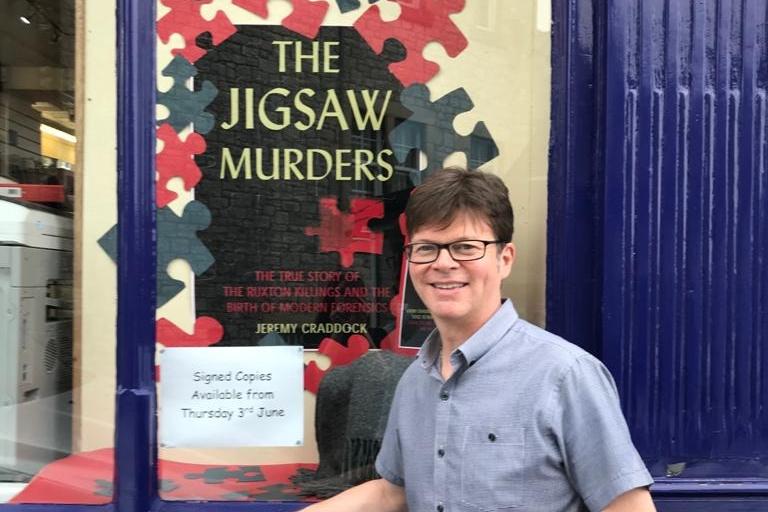
One person well placed to answer why this murder continues to attract attention is Jeremy Craddock, a former deputy editor of the Lancaster Guardian’s sister newspapers, the Garstang Courier and Longridge News, and author of The Jigsaw Murders.
First published in 2021 and still on sale, it is probably the most detailed account of the murder investigation and of life in Lancaster ninety years ago and there are hopes of it becoming a television drama.
“Like many landmark cases, there’s still huge fascination with the Ruxton murders probably because of their horrific nature, the impact they had on Lancaster and Morecambe and the resulting forensic breakthroughs,” said Jeremy.
“I think Ruxton was a Jekyll and Hyde character. Although he was charismatic, popular and could be very kind to his patients, he was also a very controlling person and clearly, very dangerous.”
Ruxton was born Bukhtyar Chompa Rustomji Ratanji Hakim in 1899 in Bombay where he married into a wealthy family in 1925.
However, just two years later, he left his wife behind and moved to Edinburgh to advance his medical career.
There he met – and became obsessed with – Isabella Kerr who had also had a short-lived marriage.
Ruxton and Isabella never married but they moved to Lancaster where he was probably the town’s first Indian doctor.
His practice, and the home where three children were raised was in between the County Cinema and a Britannic Assurance office.
The premises is now the home of Chiptech and Jeremy was invited to take a tour and give a talk at their summer barbecue this year.
“It’s a bit spooky to go into rooms where the murders took place and where the bodies were chopped up,” said Jeremy.
“Apparently, there have been some strange haunting experiences in the building such as footsteps being heard on the stairs.”
Jealousy is believed to be the reason why Ruxton killed Isabella.
Rumours were rife of her flirtations and the doctor thought she was being unfaithful, particularly with a solicitor, Bobby Edmondson who lived in Ullswater Road.
The couple constantly argued and Isabella had attempted suicide.
Thrown into this volatile environment was Mary Rogerson, born in Overton in 1915, one of 12 children whose mother had died.
Her father had remarried and the family moved to Thornton Road in Morecambe although as nursemaid to the Ruxton children, Mary lived in at Dalton Square.
It is believed that Mary must have witnessed Isabella’s murder or the aftermath and that’s why Ruxton killed her too, although he was eventually tried only for Isabella’s murder, which upset her family who felt they never had justice for the 19-year-old.
What happened after the double murder is the stuff of nightmares but led to pioneering forensic work which began when parts of Isabella and Mary’s bodies, which were mutilated in the bath, were found on September 29, 1935 in a deep Scottish ravine.
The bath is now in the Police Museum at Lancaster Castle.
By early October 1935, almost 70 separate body parts had arrived at Edinburgh University’s anatomy department and it soon became apparent that only someone with detailed anatomical knowledge could have mutilated the bodies in such a way.
Back in Lancaster and around the country, the Moffat ravine mystery, was big news and Ruxton even gave an interview to a News of the World crime reporter who turned up on his doorstep.
Coincidentally, it was a scrap of newspaper in which some of the body parts were wrapped that also led the police to Ruxton’s door.
A piece of the Sunday Graphic, dated September 15, featured a story about Morecambe Carnival, and was from a limited ‘slip’ edition only available in the Lancaster and Morecambe district. Some of those newspapers were supplied to Lancaster newsagent, George Capstick, and one was delivered to 2 Dalton Square.
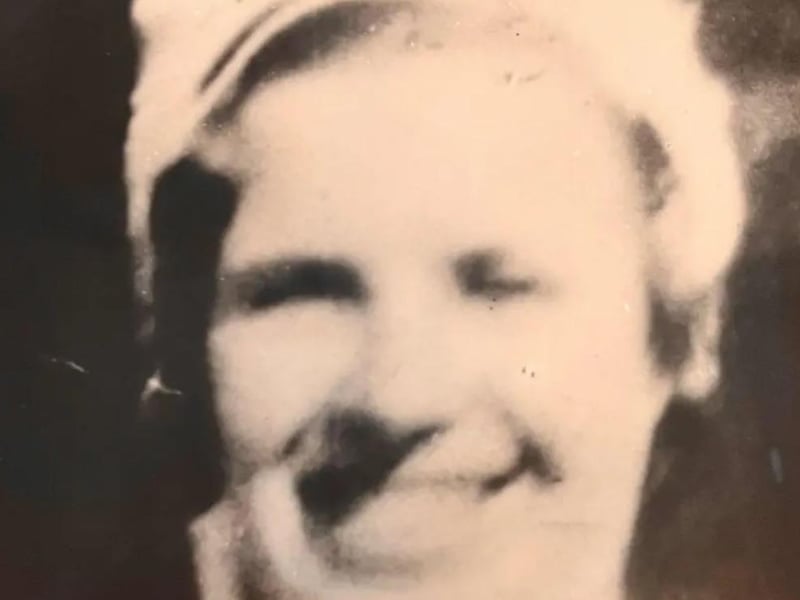
And it was Isabella and Mary’s photographs which appeared in newspapers just days afterwards which prompted the pioneering use of such images to authenticate the victims identities.
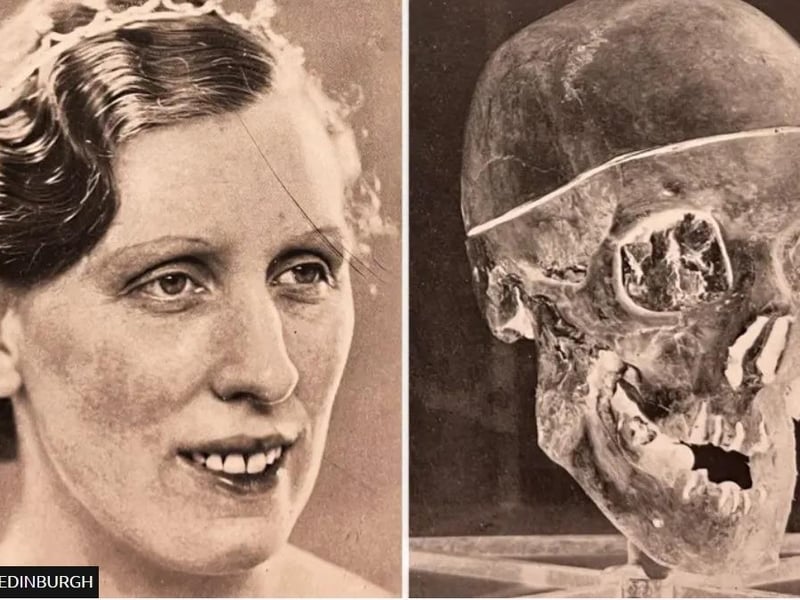
Cecil Thomas, who had taken Isabella’s photograph earlier that year, used a new technique which eventually allowed images of her skull to be superimposed on that original portrait.
A similar method was used to authenticate Mary’s identity.
The investigation also led to a breakthrough fingerprinting technique so innovative that expert opinion was sought from the FBI whose director, J. Edgar Hoover, praised the unique approach.
Ruxton was eventually charged on October 13, 1935 and made his first appearance at the Magistrates Court in Lancaster Town Hall the day after.
What became known as ‘the trial of the century’ began at Manchester Assize Court on March 2, 1936.
Following the trial, in which several Lancaster people associated with the Ruxtons gave evidence, he was found guilty and was hanged on May 12 at Strangeways Prison where he is buried.
Isabella’s final resting place has not been made public but Mary lies in an unmarked grave in Overton churchyard as the family didn’t want it to become a magnet for ghoulish tourists.
Coachloads had visited the village following in the murders.
Last year, Isabella and Mary’s skulls and some bones were discovered in Edinburgh University’s archive. These remains have since been laid to rest.
1. Looking back at Buck Ruxton murders
An X-ray of Isabella Ruxton's skull was a crucial piece of evidence in the case. Photo: University of Edinburgh. Photo: University of Edinburgh
2. Looking back at the Buck Ruxton murders
Jeremy Craddock,author of The Jigsaw Murders. Photo: contributed
3. Looking back at Buck Ruxton murders
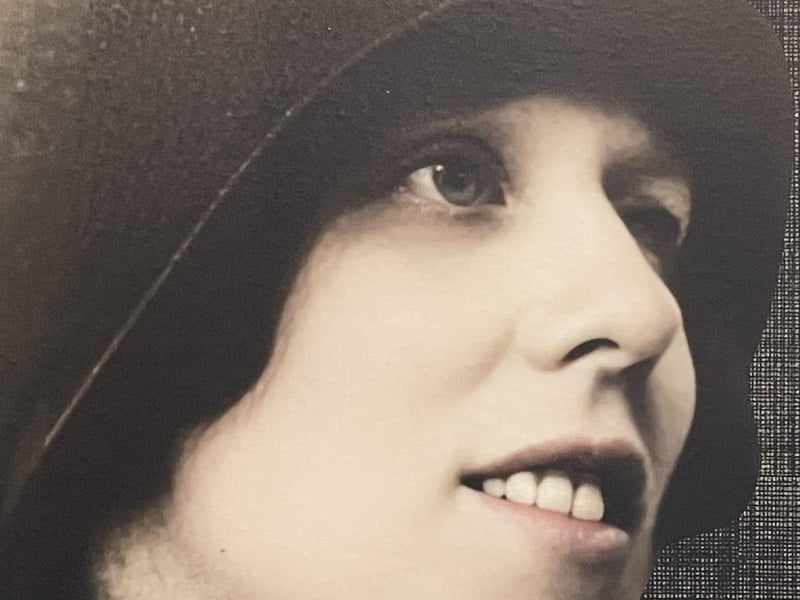
Isabella, Buck Ruxton's common law wife. Photo courtesy of Lancaster Museums Service. Photo: Lancaster Museums Service
4. Looking back at Buck Ruxton murders
The two women were reported missing by Mary Rogerson's family. Photo: University of Edinburgh. Photo: University of Edinburgh