
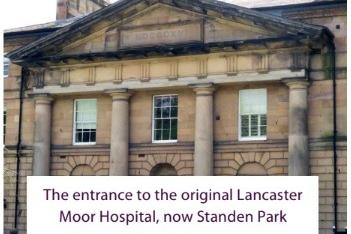
This architecturally typical Victorian asylum, with its towers and grand facade, is in fact the 'new' hospital, with the original buildings being located just across the road.
Both new and old buildings are now high-end private homes, offering a very different life from that experienced by their former residents.
The treatment of the patients who passed through its doors very much reflected the knowledge and attitudes of the time, though by today’s standards much of what they experienced would be seen as abusive.
But then you have to remember the reason behind the existence of such institutions.
They were built to try to provide a place where the lost, vulnerable and troubled might be saved from a wretched life, from harming themselves or others, and hopefully treated.
The methods used seem brutal sometimes through 21st century eyes, but for a period in 1840s, the Moor was actually regarded as pioneering and enlightened, due to its more humane approach to care and the move away from mechanical restraints and outdated treatments.
For those who worked in the Asylum the hours were long, the pay was poor and the work highly demanding.
As the attitudes and methods of treatment changed, so did the roles and expectations of the people working there.
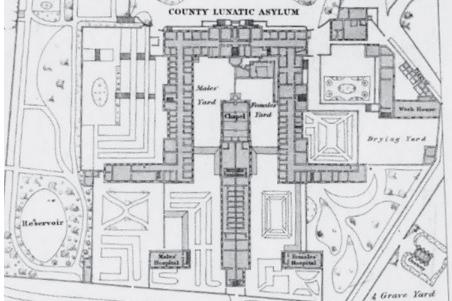
When the main building (now Standen Park) was built in 1816, understanding of mental health problems was in its infancy, and in many ways those who formulated treatments were working in the
dark.
Many notions and methods which were held to be true at that time became discredited as new ideas and attitudes took hold.
While there had been advances by the time the Annexe was built nearly 70 years later, there was still much that was not known or understood.
Over almost 200 years the Moor Hospital stood on the hill over-looking Lancaster and continued to expand up until the 1940s when it held a population of over 3000 patients.
As advances in treatments and medications occurred and mental health legislation increasingly recognised the rights of individuals, there was no longer the need for the large mental hospitals
and so institutions such as the Moor became a thing of the past.
This book looks at the evolution of the Asylum from its early days and relies heavily on the documented records of the early Superintendents whose job it was to manage the ever expanding demand for hospital places and respond to the changing ideas in society.
Fully illustrated and written in a readable, compassionate style, Lancaster Moor Hospital is packed with detail.
Former mental health nurse Gary Bradshaw has carried out a huge amount of research and tells the history not only of the Moor, but also of mental health care in previous centuries.
The Moor hospital closed in 2000, but there is still much of its history untold.
Medical records held in the archives in Preston do not become available for 100 years, so as time passes more of the history will come to light.
The story of the Moor Hospital may have many more chapters in the future.
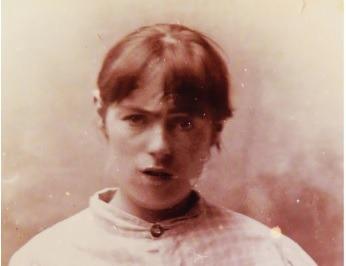
The book also includes moving accounts of real patients, their back story, treatment and fate; staff memories of working at the Moor; and many never before published photographs and documents.
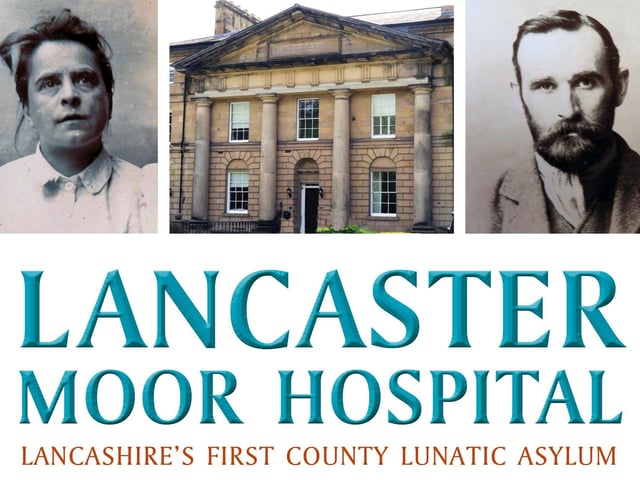
Lancaster Moor Hospital: Lancashire's first county lunatic asylum by Gary Bradshaw is published by Palatine Books, an imprint of Carnegie Publishing, ISBN 978-1-910837-52-8, price £14.99.
It is available from all booksellers, or direct – with a discount – from the small, independent local publisher at https://www.carnegiepublishing.co.uk/
1. Book on Lancaster Moor Hospital
Lancaster Moor Hospital: Lancashire's first county lunatic asylum by Gary Bradshaw is published by Palatine Books. Photo: submit
2. Book on Lancaster Moor Hospital
The entrance to the original Lancaster Moor Hospital, now Standen Park. Photo: submit
3. Book on Lancaster Moor Hospital
Mary Ward, 20-years-old when she was admitted in July 1901. Photo: submit
4. Book on Lancaster Moor Hospital
Plan of the original hospital, built in 1816, now Standen Park. Photo: submit