
Storm Desmond 10 years on: Lancaster Greens look back at local climate change actions since the big flood of 2015
Ten years ago, on December 5 2015, the River Lune burst its banks after heavy rain from Storm Desmond.
Low-lying parts of Lancaster City Centre were flooded, including the bus station, homes, shops and pubs.
A flooded electricity sub-station triggered a power cut to 61,000 homes across Lancaster and Morecambe, which lasted several days for some residents.
It also affected mobile phone masts, so many people lost communication as well as their lights, heating, cooking, and all electronic devices.
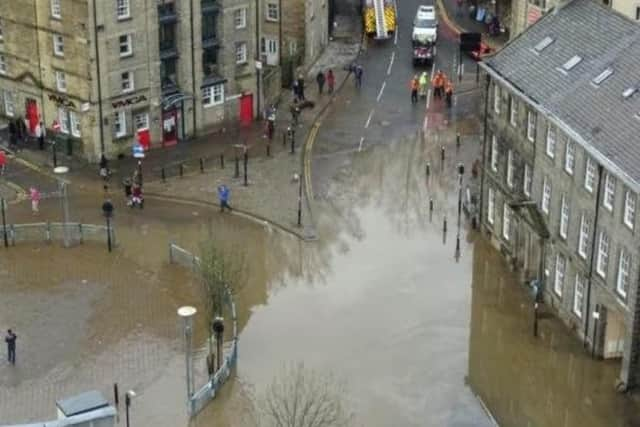

It was a traumatic time for many who had their homes and businesses flooded.
Since then, the global climate crisis has worsened – greenhouse gas emissions and average temperatures have risen as many nations have carried on with high-carbon ways of living, with increasing numbers of extreme weather events as a result.
But North Lancashire Greens have led lots of action locally to try to reduce carbon emissions and increase community resilience.
Highlights include:
- Pushing for the declaration of a climate and ecological emergency by Lancaster City Council in 2019
- Leading on the council scrutiny group that made recommendations following on the 2015 floods
- Creating a Climate Action cabinet role, currently held by Green Cllr Sam Riches. This portfolio covers renewable energy, biodiversity, active travel, electric vehicle charging and much more
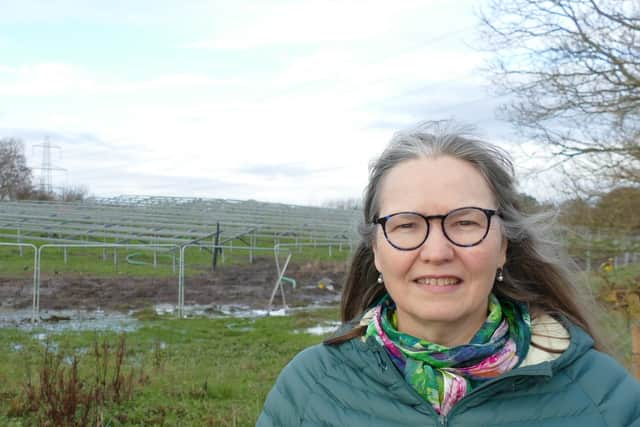
- Building council-owned solar farms at Salt Ayre (on a disused landfill site) and Burrowbeck close to Lancaster University, with Biodiversity Net Gain as a key element of the site – see more below
- Installing better insulation in hundreds of Council houses across the district and fitting solar panels and carrying out retrofits where possible.
- Setting up the South Lancaster Community Emergency Centre so that we are better prepared to respond to flooding
- Creating a Flood Forum for Thurnham & Glasson to protect those communities from flooding – see more below
- Helping to rewrite the Local Plan to put climate mitigation and adaptation at its centre
As a result of taking proactive action on climate change, Lancaster City Council has twice been recognised as the top-performing district council for Climate Action by the local climate network UK100.
And in 2025 the council won a national award for climate leadership.
The city council has secured approximately £9.2m in external funding for decarbonisation and renewable energy projects; it has recently been estimated that for every £1 of its own money that has been invested in the council’s Energy & Sustainability Team, it has seen a £12 return in the four years 2021 to 2025.
Coun Sam Riches, cabinet member for climate change, said: “I’m delighted that innovative green projects are being developed that will provide a significant income stream for the Council whilst helping to improve everyone’s quality of life by limiting air pollution.
"This work also enables us to support job creation by developing skills and creating apprenticeships.
“Lancaster City Council is already seen as a national leader in the renewable energy sector, and the political leadership provided by Greens has been vital as it has given staff the confidence to pursue these opportunities.”
Case Study 1: Burrowbeck Solar Farm
The Burrowbeck solar farm features a 3.8 MW array on council-owned land at Scotforth and represents a £3.3m capital investment.
The array is expected to ‘go live’ in April 2026. It consists of approximately 5,400 panels, which will generate approximately 4 Gigawatt Hours per year.
This has the potential to fully power the equivalent of 1,000 homes and will meet 80% of the council’s current annual electricity consumption.
Coun Riches said: “The new solar farm is a really important initiative which will help make the city council self-sufficient for its energy needs and will also limit our district’s contribution to climate change which is clearly linked to the increasing number of extreme weather events.
“Burrowbeck solar farm will be a key element in helping us to achieve Net Zero which we aim to achieve by 2030.
"This project includes removing the current reliance on gas for heating and the use of fossil fuels in council-owned vehicles, whilst supporting other individuals, businesses and organisations across the district to reach the same Net Zero goal.”
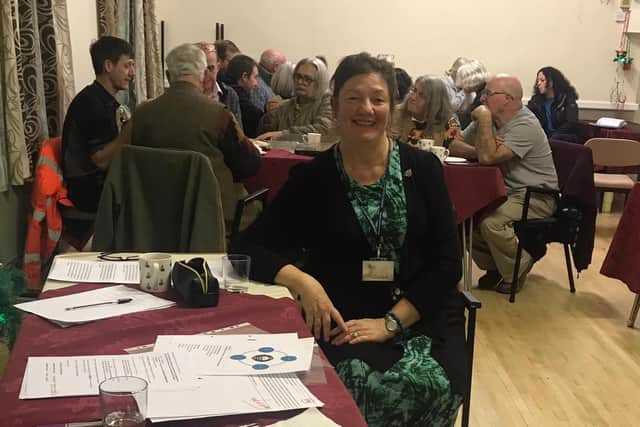
Case Study 2 – Thurnham with Glasson flood forum
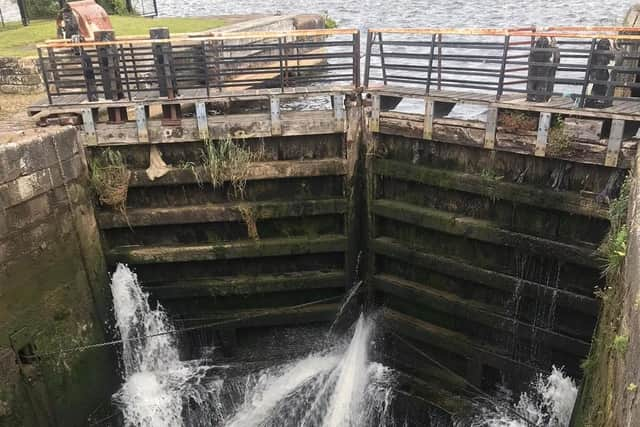
Green councillor Sally Maddocks worked with the Environment Agency (EA) to set up the Thurnham with Glasson flood forum – to respond to the greater risk of flooding caused by climate change.
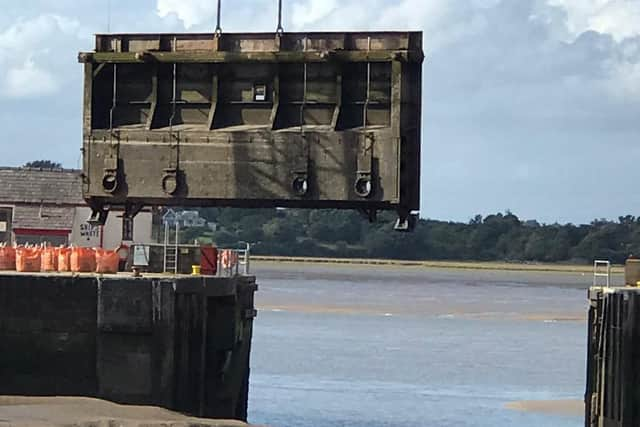
In Glasson Dock, unpredictable tides, more water in the estuary and increasing south westerly winds have caused the sea gate to silt up.
As a result, the gate has had to be removed, exposing the village to flood risk that hadn't been experienced for 30 years. At the same time, the canal lock gate broke which holds back the marina waters.
Coun Maddocks worked closely with the EA, residents and other agencies to access funding to provide flood resilience measures for homes and businesses.
She worked with the EA and the port commission on how best to communicate and deploy those measures. Coun Maddocks has also organised tide measuring around Glasson for the EA to send flood alerts as early as possible.
Coun Maddocks said: “Looking forward, the EA has been funded to develop a business case for a replacing our Glasson Sea Gate and the Flood Forum will continue to work with all agencies to make the strongest case possible for its replacement.”
Storm Desmond was an extratropical cyclone and the fourth named storm of the 2015/16 UK and Ireland windstorm season.
In the United Kingdom, the worst affected areas were centred on Cumbria, parts of Lancashire and the Scottish Borders.
Disruption from flooding, high winds, and damage to infrastructure led to the suspension of hundreds of rail services across the country, with the West Coast Main Line closed for several days due to flooding and a landslide.
Sports fixtures were also cancelled and more than 43,000 homes across the north of England were left without power, as well as more than 2,000 homes in the Republic of Ireland and around 700 in Wales.