
Allotment review reveals value of growing spaces in communities
An independent review of allotment provision in the Lancaster district has revealed how valuable these green spaces are to their communities.
The Lancaster District Allotment Review contains recommendations and ideas for how to support and grow a healthy, thriving allotment network.
It is also the first independent review of all 24 allotment sites in the district, which range in size from 10 to around 120 plots.
Most sites are in and around Lancaster, Morecambe and Heysham, but there are sites in Warton in the north, Wray in the west and Ellel and Galgate in the south.
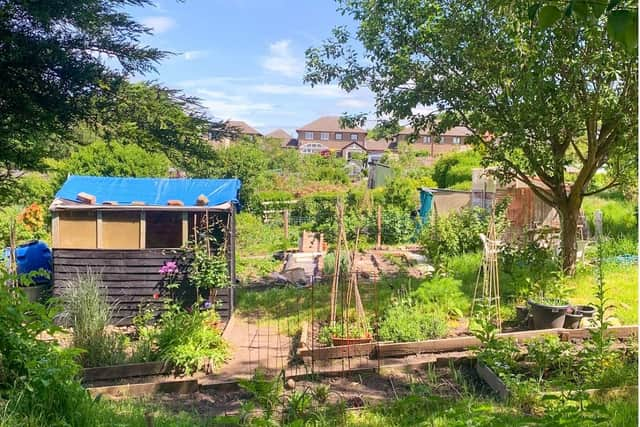

Deborah Simmonds carried out the review last year on behalf of Lancaster Community Interest Company LESS, with support from the wider FoodFutures network and funding from the UK Shared Prosperity Fund (UKSPF).
Deborah encouraged anyone with an interest in allotments to take a look at the review, and for any allotment holders to attend an allotment social lunch on November 22 in Lancaster.
She said: “Our allotment sites are hugely varied, even with the common link of providing space for growing fruit and vegetables.
“They vary in facilities, for example having mains water or not, communal buildings, or social spaces and activities, how they are managed - to their waiting list and rental changes.
“No two allotment sites are the same!”
The review, which was completed in June last year, also highlights the huge value and importance allotments offer to individuals and households.
“They offer wellbeing, a connection to nature, being part of a community, or for some plot holders having a solitary space and time for peace and quiet,” Deborah said.
“Working together as a family and sharing with children, having a ‘green space’ (particularly for people without a garden) and being able to do something positive for wildlife are extremely valuable and important things within communities.”
Deborah, who has her own plot in Torrisholme Road, said that although she wasn’t particularly green-fingered, she had developed a passion for all the things her allotment provides, adding that the district needs more of them.
Anyone interested in having an allotment can find the contact details for a lot of the district’s allotments sites on Lancaster City Council’s allotments webpage.
The Small Holdings and Allotment Act (1908) places a duty on councils to provide sufficient allotment provision.
If six or more registered voters or council tax payers make a written request for allotments, then the council must consider this request.
This legislation still applies today, however it does not impose a requirement to provide new allotments, any timeframes, or specify what “a sufficient number” of allotments is.
It is however something that a relatively small number of people can do, to raise the profile and interest in getting more allotments locally.
A printed copy of the Lancaster District Allotment Review or an online link was sent to each allotment site and library in the district.
An online version is also available at https://foodfutures.org.uk/case-studies/lancs-allotment-review/
For more resources around allotments in the Lancaster district, go to https://foodfutures.org.uk/about-us/collaborative-projects/north-lancs_allotments/