
Morecambe residents urged to spend 17 minutes daily in nature
People across Morecambe and the wide north west are being urged to make more time for nature as new research reveals 60% of adults in the region spend less than two hours a week in nature.
The newly commissioned research from Eden Project highlights a disconnect between access to nature, understanding of the benefits and the amount of time people actually spend in it.
Across the north west, 84% say spending time in nature helps their wellbeing, while 80% report having very or fairly easy access to green or natural spaces.
Coinciding with the charity’s 25th anniversary year, Eden Project is working with Lancashire Wildlife Trust and other partners to deliver Nature: Connections and Recovery – a three-year programme connecting people with nature to boost health and wellbeing, while equipping communities with the skills and confidence to take climate-positive action locally.

Greentime17 forms part of the programme and is the mission launched this week to make 17 minutes in nature as routine as getting your five-a-day or 10,000 steps.
Easy, accessible ‘greentime’ activities can take place in green or blue space, and can range from walking in a local park, spending time waterside, enjoying the garden, or even birdwatching from a balcony.
The initiative is informed by research conducted by the University of Exeter’s Centre for Environment and Human Health, which found that people who spend at least 120 minutes in nature a week are more likely to report good health and higher psychological wellbeing than those who do not visit nature at all during an average week.
Led by the Eden Project and made possible by The National Lottery Community Fund, the Ashken Family Foundation and Bupa Foundation, the Nature: Connections and Recovery programme is being delivered in partnership with Gwent, Ulster, Lancashire and Scottish Wildlife Trusts, and Intelligent Health. It targets communities across the UK that are worst affected by climate change and health inequalities.
Morecambe is one of six focus areas for the programme, alongside Dundee, Liverpool, Belfast, Newport and Cornwall.
For programme participant Amy Hodgson, 24, from Morecambe, connecting with nature has helped turn a personal passion into an ambition to build a career in sustainability.
After returning home from university and finding opportunities to begin a career in conservation difficult to come by, Amy joined a 12-week community nature programme through her local Wildlife Trust.
Since then, she has taken part in wildlife surveys, beach cleans, foraging, allotment projects and shark and ray egg case hunts, while gaining new practical skills and qualifications.
Volunteering has also helped Amy, who describes herself as naturally introverted, meet people of different ages, backgrounds and abilities and experience first-hand how nature can create connections between people.
Amy said: “Nature really does bring everybody together. It’s such a universal thing. 17 minutes in nature can be really simple. I think a lot of people have this idea that you’ve got to be deep out in the countryside or in the woods to experience nature, but I don’t think that’s necessary.
“Don’t focus on the perfect version of nature in your head. Go to your closest park or down by the canal – somewhere you can see some greenery, see some life out there. Even if it’s not perfect, it’s enough to help you mentally and connecting yourself with what's around you.”
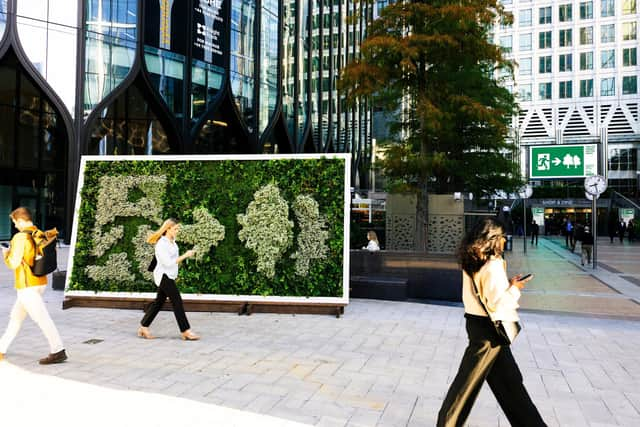
The Morecambe activity comes as Eden Project takes its message to the wider UK public through a giant living ‘Emergency Exit’ sign made primarily from drought-tolerant plants.
Unveiled in London’s Canary Wharf to mark the launch of GreenTime17, the 6x3 metre installation is designed to reflect the climate emergency and biodiversity collapse while encouraging people to take the nearest ‘exit’ into nature.
The campaign forms part of Eden Project’s renewed strategic effort to drive a revolution that engages people in climate-positive action where they live, while simultaneously improving their own health and wellbeing by spending time in nature.
The charity aims to get at least 10 million more people feeling the benefits of spending 17 minutes a day in nature and taking action for nature and climate by 2028 – the same year the charity plans to extend its impact further by opening its new site, Eden Project Morecambe, followed soon after by Eden Project Scotland in Dundee.
Laura Hacking Vile, communications officer at Lancashire Wildlife Trust, said: “At a time when we are struggling with a nature and climate crisis, alongside a mental health crisis, and multiple challenges for communities, our wellbeing team is excited to extend our service to working with the Eden Project on Nature: Connections and Recovery.”
Andy Jasper, CEO of the Eden Project, said: “I love that just 17 minutes in nature a day can make a real difference for everyone. Get outside, walk, breathe, notice what’s around you. The more connected we are to nature, the better we feel, and the more we value and protect it.”
“I’m incredibly proud that our charity Eden Project, is leading this work alongside our fantastic partners. Greentime17 is about inspiring millions of people to make one small change that, together, can have a huge impact on human health and nature recovery. Seventeen minutes: anyone can, and everyone should do it.”
Greentime17 is the public engagement campaign which aims to reach 10 million over three years – it’s part of Nature: Connections and Recovery and Eden Project’s broader Nature Connections programme, one of the charity’s key strategic priorities over the next 25 years.
Find out more at www.greentime17.com