
What does the safety cameras trial end mean for UK drivers?
Richard Evans from webuyanycar reveals the fines UK drivers could face with the safety camera trial ending
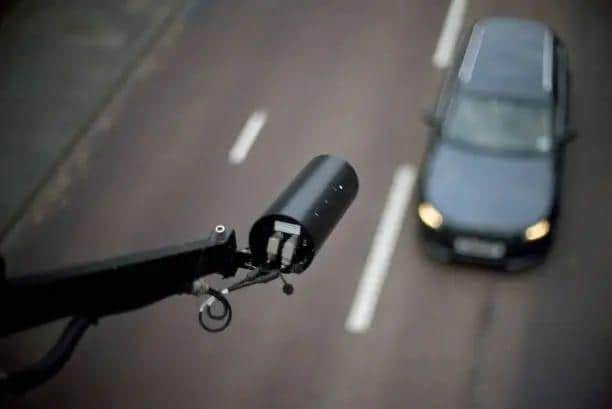
Safety cameras were introduced in the UK to detect drivers using mobile phones, driving without seatbelts and speeding. Using AI, these cameras have the technology to analyse footage, picking up on a range of dangerous driving offences. T
he trial which began in 2021 saw the speed cameras being installed across parts of the UK but is set to end in March.
With the trial ending, the safety cameras' success will be assessed to determine whether they should be rolled out more broadly across the UK. Richard Evans, spokesperson for webuyanycar, the UK’s go-to online car-buying service, shares what this could mean for UK Drivers.

Safety cameras and fines
With the trial ending there is a possibility that these AI safety cameras will be introduced permanently across the UK. These cameras increase the probability of getting caught for driving offences, no matter how big or small, due to their advanced technology.
In fact, in 2023, during their deployment on the A30 and A38, they picked up a phone offence rate of 0.31% and a seatbelt offence rate of 0.38%.[1] Additionally, during a two-month trial period in Greater Manchester over 3,200 people were caught by the safety cameras not wearing their seatbelt or using their phones whilst driving.[2]
Being caught committing a driving offence can result in various fines and punishments:
- Driving without a seatbelt: Fine of up to £500 per person, this fine also applies if you have a child under 14 in the incorrect car seat for their height or weight.[3] Seatbelts should be worn at all times when a vehicle is not parked.
- Driving and texting: If you are caught holding a phone, tablet or satnav whilst behind the wheel you risk a fine of £200 as well as 6 points on your licence. This is because any electronic handheld device acts as a distraction for drivers and can result in serious collisions.[4] This still applies when stuck in traffic or waiting at traffic lights.
- Speeding: The minimum penalty for speeding is a £100 fine and 3 points on your licence.[5]
It is important to remember that accumulating 12 points on your licence within a three-year period will result in an immediate driving disqualification. With the advanced technology these AI safety cameras have, a permanent introduction of the cameras could see more reckless drivers being stripped of their licences.
Reduce drink driving incidents
One of the most unique features of the safety cameras is their ability to detect incidents of drink driving. The cameras pick up on unusual driving behaviours including swerving and erratic speeding. The cameras can quickly inform local police. This feature has the potential to prevent hundreds of collisions. Deaths due to drink driving-related incidents on UK roads have risen to 300 a year as of 2024, if the safety cameras become a permanent feature across the UK, it could allow police to intervene and prevent lives from being lost.[6]
Better driving
The hope is these surveillance measures will encourage drivers to adhere to safe driving practices and that they will be deterred from committing driving offences which could put themselves and other road users at risk. There were an estimated 1,624 driving fatalities in 2023, many of which could be prevented if safe driving practices improved.[7] If it is concluded that safety cameras should be permanently brought in across the UK, the number of driving fatalities could significantly decrease.
Key Information about the current safety camera trial
- The trial currently sees safety cameras on roads all across the UK in areas including Durham, Northampton, Sussex and Norfolk.
- A 2023 trial in Cornwall using similar AI cameras saw 300 Brits being caught for driving offences in just 3 days.[8]
- The AI cameras can be mounted to a vehicle or trailer or erected on the side of the road.
- A two step authentication process, partially using AI, can detect a range of driving offences including backseat passengers not wearing seatbelts.