
National Writing Day: Local connection with women’s literacy pioneer to be celebrated
Preparations are being made to celebrate a pioneer of women and girls’ literacy with a Lancashire connection, to mark National Writing Day on June 25. Lucy Cavendish (1841-1925), also known as Lady Frederick Cavendish, is a direct relation of her present-day namesake Lucy Cavendish of Holker Hall, which was in Lancashire at the time of the pioneer’s work.
She was a pivotal figure in the movement to transform women’s education in Victorian Britain. Lucy Cavendish College was founded to support mature women’s education in 1965 at the University of Cambridge and named in tribute to her enduring legacy.
National Writing Day is run by the National Literacy Trust and takes place on June 25. It is an annual celebration of the power of writing creatively, inspiring people of all ages and abilities to try writing for fun and self-expression.
To celebrate the day and to honour Lucy Cavendish’s achievements, expert guides with be delivering talks on her life and works on Wednesday, June 25 in Holker Hall’s library at 12 noon, 2:15pm and 3:30pm. Admission to the talks is free with a valid Hall & Gardens ticket.
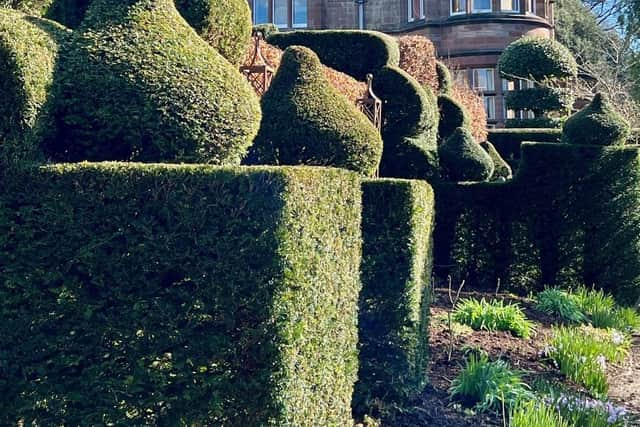

Born in 1841 into the reform-minded Lyttelton family, Lucy grew up in a world where public duty and moral responsibility were core values. History often remembers her in connection with her husband—Lord Frederick Cavendish, who grew up at Holker Hall near Cartmel, which was in Lancashire at that time, and returned there with his wife after their wedding.
He was tragically assassinated in the Phoenix Park murders of 1882 in Dublin. Lucy Cavendish of the present day, who lives at Holker Hall, is Lord Frederick’s great, great, great niece.
The individual legacy of the Lucy Cavendish of the 1800s is quietly revolutionary, particularly in advancing literacy and education for women and girls. In a society where women's intellectual potential was often dismissed, Lucy recognised literacy—reading and writing—as the foundation of empowerment.
She believed that giving girls access to these basic skills was not merely a question of personal improvement, but a matter of social justice. Literacy enabled women to engage with ideas, understand their rights, raise educated children, and contribute meaningfully to public discourse.
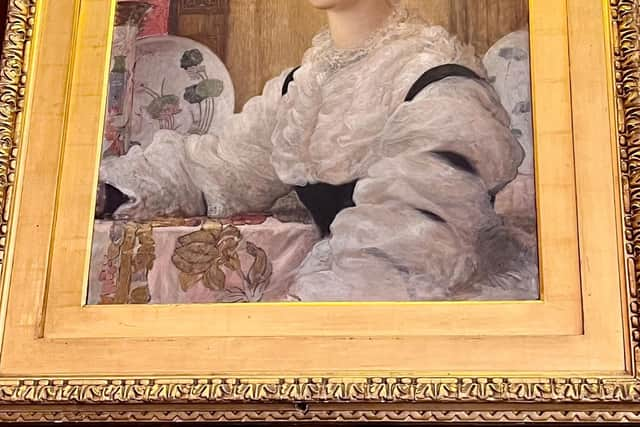
Lucy’s commitment was evident in her early support for Girton College, Cambridge, founded in 1869 as the first residential college for women in England. At a time when even basic academic instruction for girls was rare, Girton aimed to offer rigorous university-level education, grounded in classical learning and critical thinking. Lucy lent the movement her social influence and financial support, helping to legitimise the idea that women were intellectually equal to men—and just as deserving of the ability to read and write critically.
She was later involved with the development of Newnham College, also at Cambridge, which placed a strong emphasis on intellectual self-discipline and access to scholarly texts. Lucy understood that advanced literacy—especially analytical reading and articulate writing—was essential for women seeking not just academic recognition but broader societal participation.
Her work with the Girls’ Public Day School Company (now the Girls’ Day School Trust) further emphasised her belief in foundational literacy for all girls, not just the elite. These schools offered rigorous academic curricula, enabling girls from a range of backgrounds to acquire the reading, writing, and analytical skills that were prerequisites for meaningful employment, civic engagement, and personal independence.
This was a radical departure from the limited “accomplishments” education traditionally available to girls, which focused more on embroidery and etiquette than critical reading or essay writing.
Lucy saw literacy as a gateway to informed citizenship and moral agency. Through reading, girls could encounter new worlds, challenge accepted norms and imagine futures beyond domestic servitude. Through writing, they could articulate their thoughts, advocate for their rights, and shape the intellectual culture of their communities. In fostering this literacy revolution, Lucy Cavendish played a vital part in reshaping the role of women in British society.
After the loss of her husband, she continued this work with quiet resolve, her focus sharpened by personal tragedy. In tribute to her enduring legacy, Lucy Cavendish College was founded in 1965 at Cambridge to support mature women’s education—continuing her belief that it’s never too late for women to claim their right to read, write, and lead.
Holker Hall’s Head of Visitor Services, Fran Horne, is delighted that the Hall Guides have chosen to honour such a pioneering figure in this way. “Lucy Cavendish didn’t just promote education—she promoted literacy as liberation and through that, she helped write a new chapter in the history of women's rights. National Writing Day gives us the opportunity to celebrate her contribution to female literacy and empowerment through learning and our Hall Talks promise to be both informative and enlightening”.
Holker Hall & Gardens is set in 25 acres of formal & woodland gardens and ancient parkland, with the famous herd of Menil fallow deer showcasing nature at its most graceful. It offers beautiful, landscaped grounds and winding paths that take you through the collection of rare and exotic plants and trees that thrive in the extraordinary micro-climate of the Cartmel Peninsula.
Highlights along the way are the Cascade and Burlington Fountain, the Sunken Garden, the Willow Den children’s play area, and the 400-year-old veteran Lime tree, the Holker Great Lime, voted one of Britain’s grandest trees. The Hall, a wonderful example of neo-gothic architecture in the Elizabethan style and home of the Cavendish family, is open to visitors and the Courtyard Cafe offers delicious homemade food, cakes and daily specials. Holker Hall & Gardens hosts an inspirational programme of special events throughout the year, guaranteed to appeal to all ages and interests.